If someone mentioned you might have a cracked heat exchanger, it’s worth taking seriously. We run into this issue regularly at Whale Worth It! Plumbing, Heating & Air, and it’s one of those furnace problems that instantly makes homeowners nervous. For good reason, too. A heat exchanger crack can affect both comfort and safety, so it’s not something you want to ignore or “wait and see.”
That said, the symptoms can be confusing at first. In fact, many people assume it’s a thermostat problem, an airflow issue, or even a gas supply issue. So let’s walk through the most common cracked heat exchanger symptoms, what they actually mean, and what you should do next.
What a Heat Exchanger Does (And Why Cracks Matter)
The heat exchanger is the part of your furnace that separates combustion gases from the air your home breathes. In other words, it’s literally the barrier that allows your furnace to heat your home safely.
So when cracks form, that barrier may no longer be airtight. As a result, the furnace can leak combustion byproducts into the system. Most importantly, this can include carbon monoxide.
(It’s not a reason to panic, but it is a reason to take it seriously.)
Cracked Heat Exchanger Symptoms Homeowners Commonly Notice
A cracked heat exchanger doesn’t always announce itself with dramatic noise. Instead, it often shows up through patterns that don’t feel “normal” for your system.
Here are the big warning signs we look for during service calls.
1. The Furnace Keeps Shutting Off Mid-Cycle
If your furnace starts, runs briefly, then shuts off, it might be going into a safety lockout. Often, the system is detecting a condition that’s unsafe and shutting down to protect you.
Sometimes homeowners describe it as “my furnace tries, then quits.”
That’s a huge clue.
2. Your Furnace Blower Runs Constantly
This one surprises people. You may think your furnace is “stuck on,” but the blower can run nonstop when the system is overheating. In many cases, the furnace shuts the burners down for safety, and then the blower keeps running to cool everything back down.
This often involves the furnace limit switch, which shuts off the burners if the system overheats—while the blower keeps running to cool things down.
3. Strange Odors When the Heat Runs
A little dust smell at the start of the season is normal. However, repeated odors—like burning plastic, electrical smells, or hot metal—should be checked. We’ve had people tell us it smells like “hot pennies.” That’s oddly specific… and also not uncommon.
Even if it comes and goes, it still matters.
4. Visible Soot or Rust Near the Furnace
If you see black soot around the furnace cabinet, burner area, or venting, it can point to a venting or exhaust issue. Likewise, excessive corrosion can suggest abnormal moisture, which sometimes happens when combustion gases aren’t leaving the system the way they should.
While soot doesn’t automatically mean a crack, it often shows up in the same “family” of furnace safety concerns.
Cracked Heat Exchanger Symptoms That Point to Combustion Problems
Some symptoms aren’t about comfort. Instead, they relate to how the furnace is burning fuel.
Flames That “Dance” or Flicker Strangely
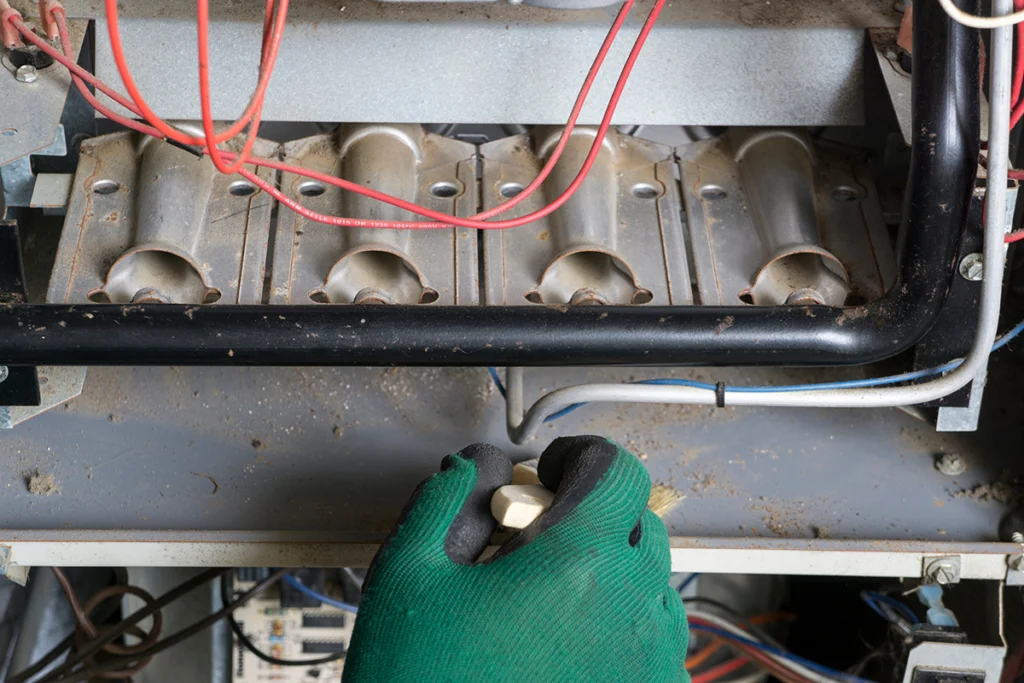
A technician may check burner flame patterns to look for flame rollout or other irregular behavior. Flame rollout is when flames spill out of the burner area instead of staying contained, which can point to dangerous venting or combustion issues. Poor flame behavior can also suggest pressure or airflow changes caused by a compromised heat exchanger.
Dark Streaks Inside the Furnace Cabinet
If the furnace is “breathing wrong,” it can leave visible streaking. It’s not always easy to spot without opening panels. Still, it’s a known indicator.
Why a Cracked Heat Exchanger Can Make Heat Feel Weak
Even when the furnace still runs, a cracked heat exchanger can lead to poor performance. That’s because the furnace may short-cycle, overheat, or limit output to stay safe.
If you’re experiencing weak heating, it’s worth reading our guide on what it means when a furnace isn’t blowing hot air. Many of those causes overlap with early heat exchanger problems.
What Causes a Cracked Heat Exchanger?
A heat exchanger usually cracks due to:
-
Age and metal fatigue
-
Overheating from restricted airflow (dirty filter, blocked vents, undersized ductwork)
-
Short cycling that creates rapid expansion/contraction
-
Improper gas pressure or burner setup
-
Poor maintenance history
In other words, a crack isn’t always “bad luck.” Often, it’s the result of stress over time.
Is a Cracked Heat Exchanger Dangerous?
Potentially, yes.
A cracked heat exchanger can allow carbon monoxide to mix with household air under certain conditions. That’s why we recommend carbon monoxide detectors in any home with gas appliances.
The CDC notes that carbon monoxide poisoning often happens when fuel-burning appliances aren’t vented properly or are used incorrectly indoors.
The Red Cross also explains why it’s important to install alarms near sleeping areas and test carbon monoxide detectors regularly.
How We Confirm a Cracked Heat Exchanger (Without Guessing)
This matters because there’s a lot of misinformation online. And honestly? Some homeowners get told they need a new furnace without solid proof.
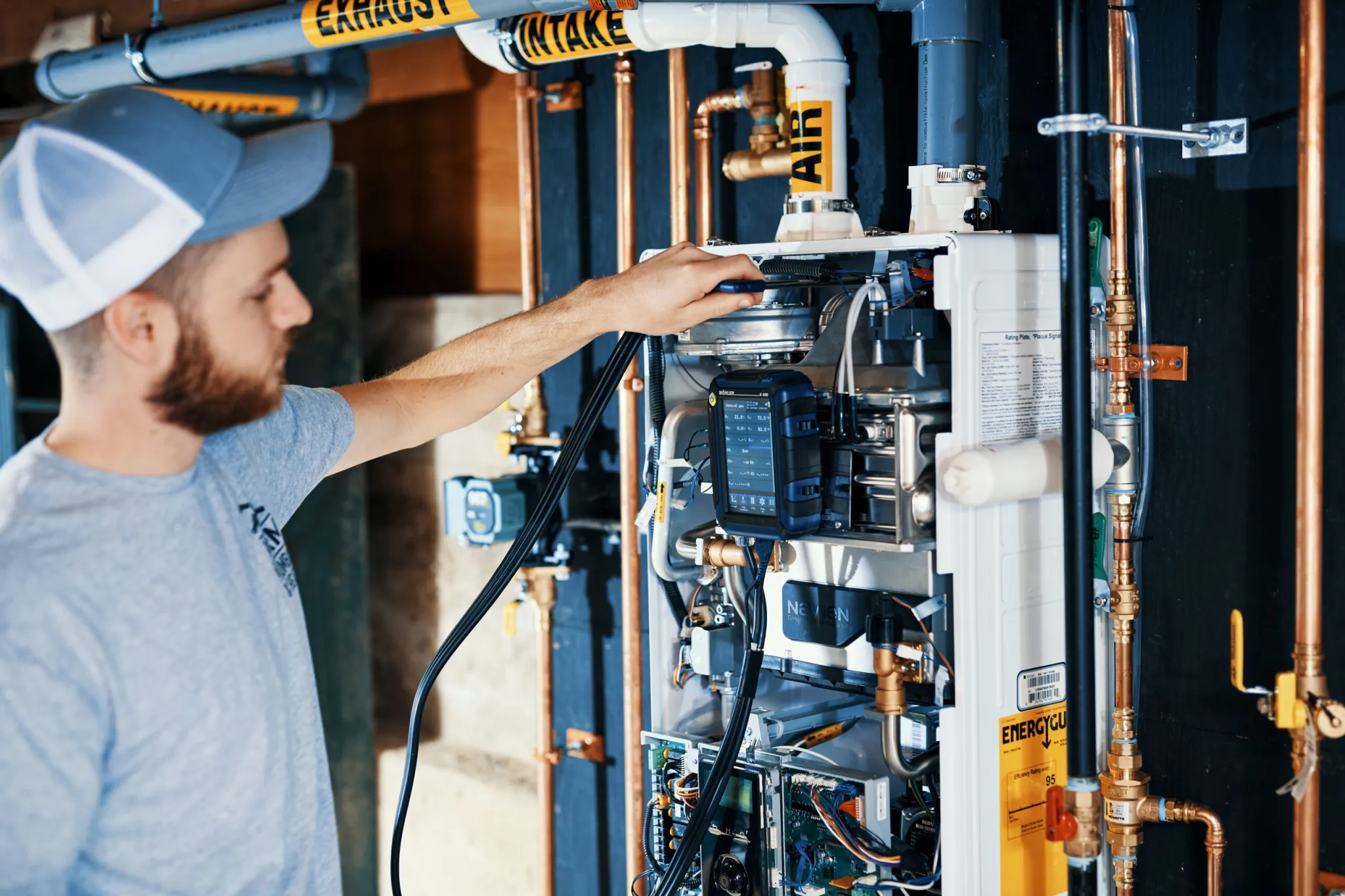
At Whale Worth It!, we approach this with testing and documentation. Depending on the situation, we may use:
-
Visual inspection with mirrors or cameras
-
Combustion analysis tools
-
Temperature rise tests
-
Pressure or draft diagnostics
Sometimes the crack is obvious. Other times, it’s not. Either way, we don’t “assume.”
Repair vs Replace: What Most Homeowners Decide
In most cases, a cracked heat exchanger leads to replacement, not repair. That’s because:
-
The heat exchanger is expensive and labor-heavy
-
Warranties vary by manufacturer
-
Safety concerns raise the stakes
That said, the age of the furnace is a huge deciding factor. If the system is older, heating replacement is often the more practical long-term solution.
If you’re unsure where your system sits in its lifespan, our post on how long furnaces last helps frame whether replacement is truly the smarter long-term move.
When to Call a Pro (And What to Do Right Now)
If you suspect a cracked heat exchanger, here’s what we recommend:
-
Turn the furnace off if you feel unsafe
-
Open a window if you notice odors or headaches
-
Confirm your CO detectors are working
-
Schedule a professional inspection ASAP
Near the end of the heating season especially, this issue becomes more common. That’s because furnaces have been running hard for months.
Schedule a Furnace Safety Inspection
If you suspect a cracked heat exchanger, don’t try to troubleshoot it by trial and error. Turn the system off if you feel unsafe, and make sure your carbon monoxide detectors are working. From there, the smartest move is a professional inspection, because this is one furnace problem where guessing can backfire fast.
If you’re located in or around North Shore, MA, Whale Worth It! Plumbing, Heating & Air can inspect your furnace, confirm what’s really going on, and explain your options clearly. Contact us today to schedule an inspection or book heating repair service if you’re dealing with cracked heat exchanger concerns or shutdown issues.
FAQs (Quick Answers)
Here are a few quick answers we hear often from homeowners.
Sometimes, yes. However, it may shut off for safety or become unsafe to operate.
Short cycling, odd odors, weak heat output, and blower fan issues are common signs.
Not always. That’s why a professional inspection is important if symptoms appear.
Sometimes. Coverage depends on the brand, model, and warranty registration status. Can a furnace run with a cracked heat exchanger?
What are the most common cracked heat exchanger symptoms?
Will a carbon monoxide detector always go off?
Is a cracked heat exchanger covered under warranty?