A puddle by the furnace is never a fun surprise. If your furnace is leaking water, don’t panic—but don’t ignore it either. In most cases, the fix is straightforward once you trace the water to the drain, pump, venting, or humidifier. We’ll start with what this typically means and the few situations where it’s urgent, then we’ll move into the safety steps and the most common sources.
What a Furnace Leaking Water Can Mean
Most of the time, a furnace leaking water call isn’t a flooded heat exchanger or something dramatic. It’s typically a condensate drain issue, a pump problem, or a humidifier drip that’s been quietly building up.
That said, there are a couple situations where it is urgent—especially if water is near wiring, controls, or you smell gas. So before we chase the source, the goal is simple: protect the system, prevent damage, and then narrow down where the water is coming from.
If Your Furnace Is Leaking Water, Start With These Safety Steps
Before you investigate, take a minute to shut things down and prevent damage. A furnace can involve electricity, hot components, and sometimes gas, so start here:
-
Set the thermostat to OFF.
-
Shut off power to the furnace at the switch (or breaker if it is safe and dry).
-
If you see active dripping, place towels or a shallow pan under the leak.
-
If you smell gas, don’t open sealed burner areas. Leave the furnace alone and call for help.
Urgent: If the water is near wiring, controls, or a junction box, treat it as urgent. Water and electricity don’t negotiate.
Once the system is off and the water is contained, you can start narrowing down where the leak is coming from. Next, we’ll go through the most common sources and the quick checks that help confirm what’s happening.
Where the Water Is Coming From
When we get calls about a furnace leaking water, it’s most often coming from one of a few places. The goal is to figure out which system is producing the water, then track it back to the source:
-
Condensate drain line clog (common on high-efficiency furnaces)
-
Condensate pump overflow or failure
-
Humidifier leak (feed tube, pad, or drain)
-
Exhaust vent condensation dripping back
-
A/C coil drain issue (if your system shares ductwork)
Also, quick context: heating and cooling use a huge chunk of home energy. ENERGY STAR notes nearly half of a typical home’s energy use goes to heating and cooling, so when something’s off, you usually feel it fast — in comfort and costs.
Why Your High-Efficiency Furnace Produces Water
If your high-efficiency furnace is leaking water, this is often the reason: many modern furnaces are condensing units. They pull extra heat out of the exhaust, and that process turns water vapor in the flue gases into liquid water. That condensate is normal — and it’s supposed to drain away through the furnace’s condensate system.
What’s not normal is when that water can’t drain correctly. If the drain line, trap, or pump can’t move condensate out like it should, it backs up and shows up as water around the furnace.
This is also why high-efficiency furnaces have more moisture-handling components than older models. The U.S. Department of Energy notes that high-efficiency systems increase efficiency by condensing flue gases in a second heat exchanger — which naturally creates condensation that has to be drained properly.
In other words: higher efficiency often means more condensate, so a small clog, a trap issue, or vent-related condensation can turn into a puddle pretty fast.
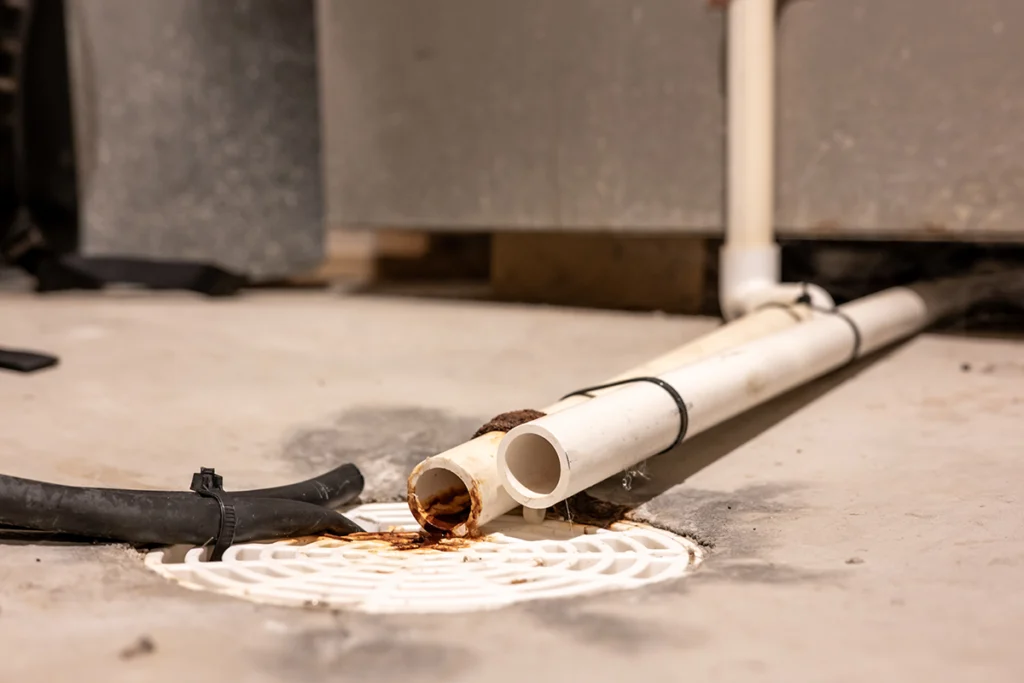
The Most Common Culprit: A Clogged Condensate Drain Line
A partially clogged condensate drain line can drip slowly for days. Then it suddenly overflows when the furnace runs longer — which is why a furnace leaking water often shows up out of nowhere.
What You Might Notice
-
Water near the furnace base
-
A musty smell nearby
-
The furnace shuts off mid-cycle (some systems trip a float or safety switch)
What You Can Do
-
Check for a kinked vinyl drain tube or a loose connection.
-
Look for a small P-trap on the drain setup and make sure it’s seated correctly.
-
If you have a clear tube, see if you can spot sludge buildup. (Not glamorous, but real.)
One more clue: if the furnace starts but your vents blow cool air, a safety shutoff may be interrupting the cycle to prevent overflow.
Condensate Pump Overflow: The Tiny Box That Causes Big Puddles
If your furnace drains into a condensate pump, that pump has one job: move water to a drain. When it fails, the water has nowhere to go — so it overflows.
Signs the Pump Is the Issue
-
Water around the pump itself
-
The pump hums but doesn’t drain
-
The reservoir looks full and never empties
Sometimes the fix is as simple as clearing the pump’s inlet or discharge line. Other times, replacing the pump is the only real solution. Either way, don’t ignore it — an overflow can soak flooring fast.
Humidifier Leaks That Look Like Your Furnace Is Leaking Water
Whole-home humidifiers are a great comfort upgrade, but a small leak can look like the furnace is the problem. A cracked drain tube, a misaligned pad, or a loose feed line can drip onto the furnace cabinet and create a puddle underneath.
Quick Check
-
Look for water tracks starting above the furnace body.
-
Inspect the humidifier housing and drain.
-
Check the small water supply line for slow drips.
If you want to prevent repeat leaks, this is also a good time to confirm the humidifier is set correctly. (Too high = extra condensation problems.)
A Quick Note About Mold Risk
Any indoor leak can turn into a moisture problem if it sits. U.S. Environmental Protection Agency notes that if wet or damp materials are dried within 24–48 hours, in most cases mold won’t grow.
So even if you’re waiting for service, start drying right away — run fans, set up a dehumidifier, and check hidden areas like subflooring and drywall edges.
When a Furnace Leaking Water Situation Shuts the System Down
Some systems will keep running while leaking. Others shut down on purpose to prevent overflow damage. When a leak trips a float switch, safety switch, or affects control wiring, you can end up with a no-heat situation on top of the water.
When the furnace stops completely, use the same starting point as you would for a furnace that won’t turn on — but avoid electrical checks if there’s any moisture nearby. Water near wiring, controls, or inside the cabinet is a stop-and-call situation: shut the system down and contact a pro.
What Not to Do
These are the mistakes that turn a small leak into a bigger repair.
-
Don’t keep restarting the furnace hoping it “pushes through.” That can worsen overflow.
-
Don’t bypass safety switches. Ever.
-
Don’t ignore water near electrical components. Shut power off and call.
If any of this sounds like what you’re seeing, it’s time to bring in a pro.
When It’s Time to Call a Pro
Call for professional help if:
-
Water returns right after you dry it
-
You see water inside the furnace cabinet
-
The system shuts off after the heat kicks on
-
You notice rust streaks, corrosion, or recurring moisture
-
You suspect a venting issue or an internal drainage problem
If you’re seeing any of the above, shut the system down and call for service—especially if water is near controls, wiring, or inside the cabinet.
At Whale Worth It! Plumbing, Heating & Air, we isolate the source first, then fix it the right way. If you want help stopping the leak, our team provides professional furnace repair across the North Shore.
Schedule Furnace Repair on the North Shore
If you’re seeing your furnace leaking water and want it handled fast, contact Whale Worth It! Plumbing, Heating & Air. We serve the North Shore and surrounding areas, and we can diagnose the cause, stop the leak, and get your heat back safely.
FAQs When You Have a Furnace Leaking Water
When you’re dealing with water at a furnace, these are the top questions we hear.
Most often it’s a clogged condensate drain, a failing condensate pump, or a humidifier leak.
If it’s winter and the AC hasn’t run, it’s usually condensate or the humidifier. In summer, an AC drain clog is common.
Switch the thermostat off first, then shut off furnace power at the switch or breaker.
Yes. Many systems have a safety/float switch that shuts heating down to prevent overflow damage. Why is my furnace leaking water in winter?
How do I tell if it’s my furnace or my AC drain leaking?
What should I turn off if my furnace is leaking water?
Can a clogged condensate line make my furnace shut off?