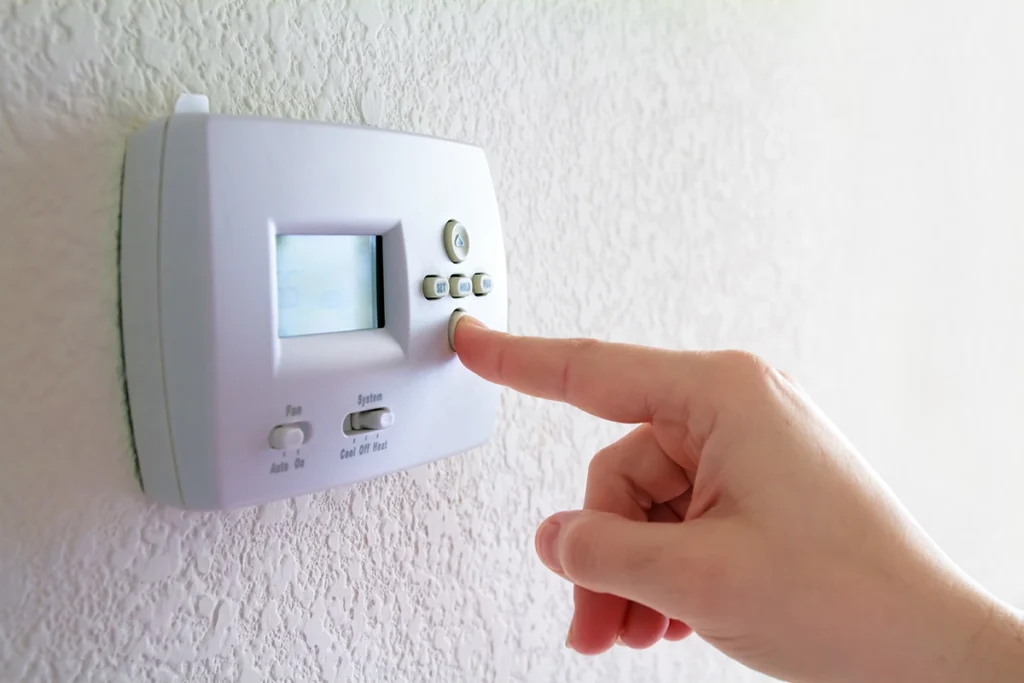
When homeowners see aux heat appear on their thermostat, it often causes confusion or concern. From our day-to-day work at Whale Worth It! Plumbing, Heating & Air, this question comes up constantly during colder months: “What does aux heat mean?” Homeowners wonder whether something is wrong, whether energy bills will spike, or whether the system is failing. In reality, the system is usually doing exactly what it was designed to do. Still, understanding how aux heat works helps you spot real problems sooner and avoid unnecessary stress.
What Is Aux Heat?
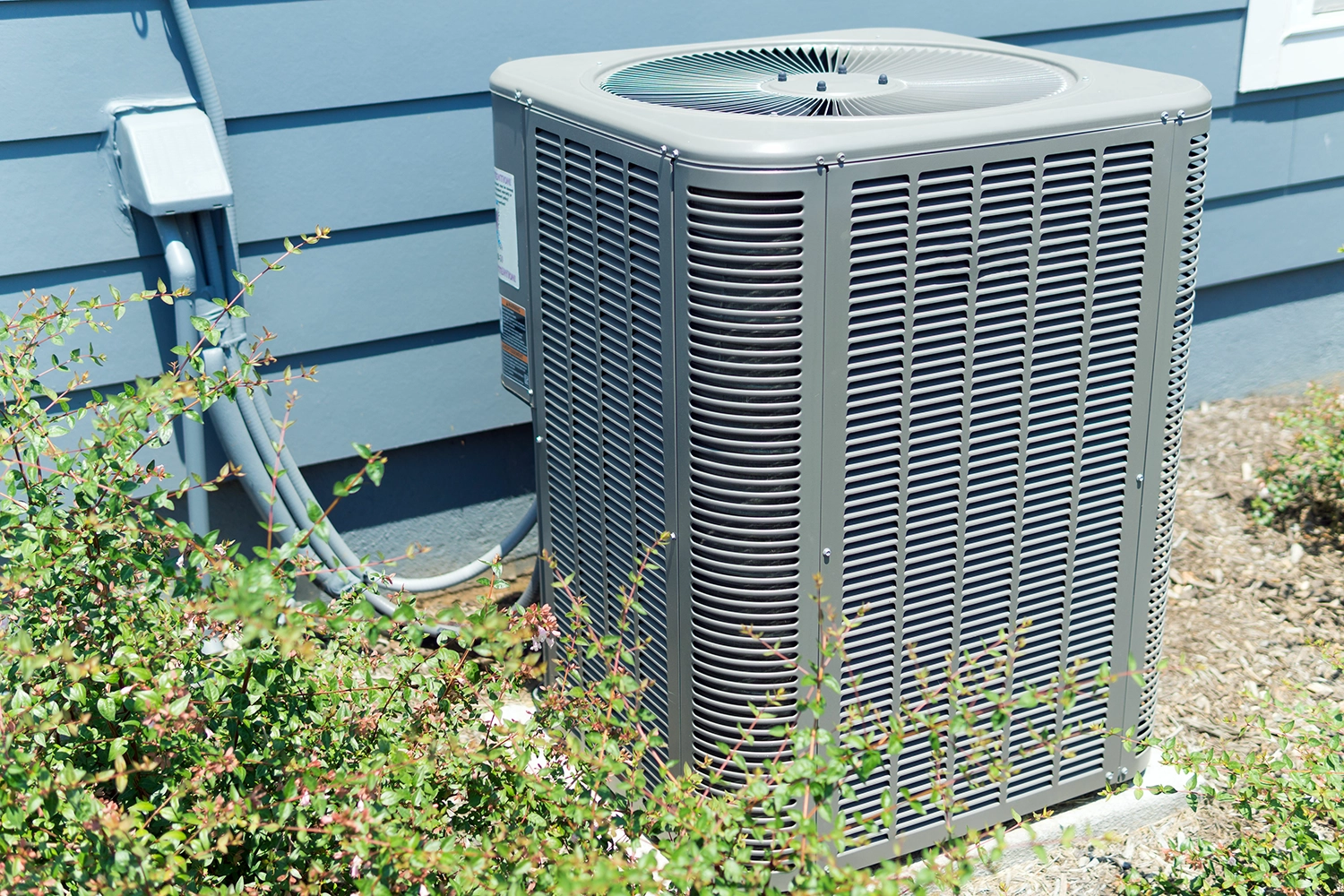
Aux heat is short for auxiliary heat. It’s a backup heating source built into heat pump systems, not furnaces. While a heat pump normally heats your home by pulling warmth from outdoor air, auxiliary heat provides added support when needed.
In most systems, auxiliary heat comes from electric resistance heating strips or, in some setups, a secondary heat source. It operates automatically alongside the heat pump and is designed to assist — not replace — the primary heating process.
When Does Aux Heat Turn On?
Auxiliary heat turns on when outdoor conditions or system demands exceed what the heat pump can handle efficiently on its own. This most often occurs during colder temperatures or after sudden thermostat changes. For example, raising the thermostat several degrees at once may trigger aux heat to speed up temperature recovery.
Additionally, aux heat can engage during defrost cycles. When a heat pump clears ice from the outdoor unit, the system briefly relies on auxiliary heat to maintain indoor comfort. Although that sounds alarming, it’s a normal part of operation.
Aux Heat vs. Emergency Heat
Aux heat and emergency heat are often confused, but they serve different purposes. Auxiliary heat turns on automatically when the heat pump needs help keeping up with demand. Homeowners don’t control it directly—it cycles on and off as part of normal operation.
Emergency heat, on the other hand, is a manual setting. It’s used when the heat pump isn’t operating at all, such as during a mechanical failure or extreme outdoor conditions. In this mode, the system bypasses the heat pump and runs only the backup heat source.
Because emergency heat relies on less-efficient heating, it typically costs more to operate and works best as a short-term solution. Extended emergency heat use often points to a problem, unlike auxiliary heat, which supports normal operation.
Why Auxiliary Heat Can Increase Energy Bills
Aux heat uses more electricity than a heat pump alone. Electric resistance heat converts electricity directly into heat, which is less efficient and costs more to run. According to the U.S. Department of Energy, heat pumps can reduce electricity use for heating by up to 75% compared to electric resistance systems alone.
Because of that, frequent auxiliary heat operation can noticeably increase winter energy bills. By contrast, short periods of auxiliary heat during extreme cold are normal and often unavoidable.
How Auxiliary Heat Works With Forced Air Systems
Even when auxiliary heat is running, your system still relies on forced air to deliver warmth. The heat source may change, but the blower, ductwork, and vents remain responsible for moving warm air throughout the home. That’s why many homeowners benefit from understanding how forced air heating systems distribute heat.
Because of that, airflow problems can make aux heat seem ineffective. Poor duct design, blocked vents, or weak airflow can reduce comfort even when the system is producing heat. In these situations, homeowners often blame auxiliary heat when airflow is the real issue.
Is It Bad If Aux Heat Runs All the Time?
If aux heat runs constantly, it’s worth investigating. While short cycles are normal, frequent or nonstop use may signal a problem. Common causes include poor insulation, undersized heat pumps, or thermostat settings that demand rapid temperature changes.
Research from the National Renewable Energy Laboratory shows that air-source heat pump efficiency declines as outdoor temperatures drop, which explains why auxiliary heat may activate during colder weather. Even so, a properly sized system should not rely on auxiliary heat as its primary heat source.
When to Call for Professional Help
If you notice aux heat running far more than expected, it’s worth having the system evaluated. From our experience at Whale Worth It! Plumbing, Heating & Air, early inspection helps prevent higher energy bills and unnecessary wear. Sometimes the fix is as simple as thermostat adjustments. Other times, a professional heating repair evaluation is needed to identify airflow issues, system inefficiencies, or heat pump performance problems.
If you’re unsure why your system behaves a certain way, contact our team for help. We’re happy to explain what’s normal and what needs attention. For homeowners in the North Shore and surrounding areas of Massachusetts, scheduling service early can make winter far more comfortable.
Frequently Asked Questions About Aux Heat
Homeowners often ask the same questions about auxiliary heat. Below are a few of the most common ones we hear.
Aux heat means your heat pump is using backup heating to help maintain indoor comfort during colder conditions.
Auxiliary heat often turns on during cold weather, defrost cycles, or after large thermostat temperature changes.
Yes. Constant auxiliary heat use can increase energy bills and may indicate insulation, sizing, or system issues.
No. Auxiliary heat is designed to activate automatically. Turning it off can reduce comfort and system performance. What does aux heat mean on a thermostat?
Why did my aux heat turn on suddenly?
Is it bad if auxiliary heat stays on all the time?
Should I turn off aux heat to save money?
Understanding auxiliary heat helps homeowners avoid unnecessary worry and recognize real problems early. When questions come up, having the right information—and a trusted professional—makes all the difference.