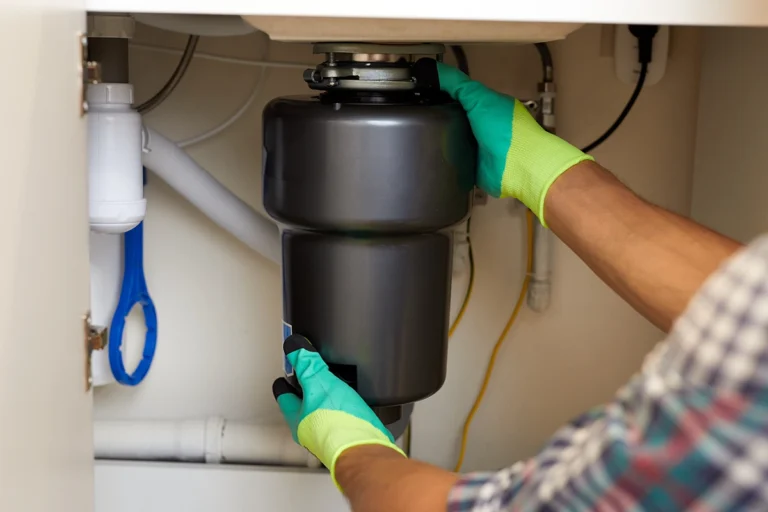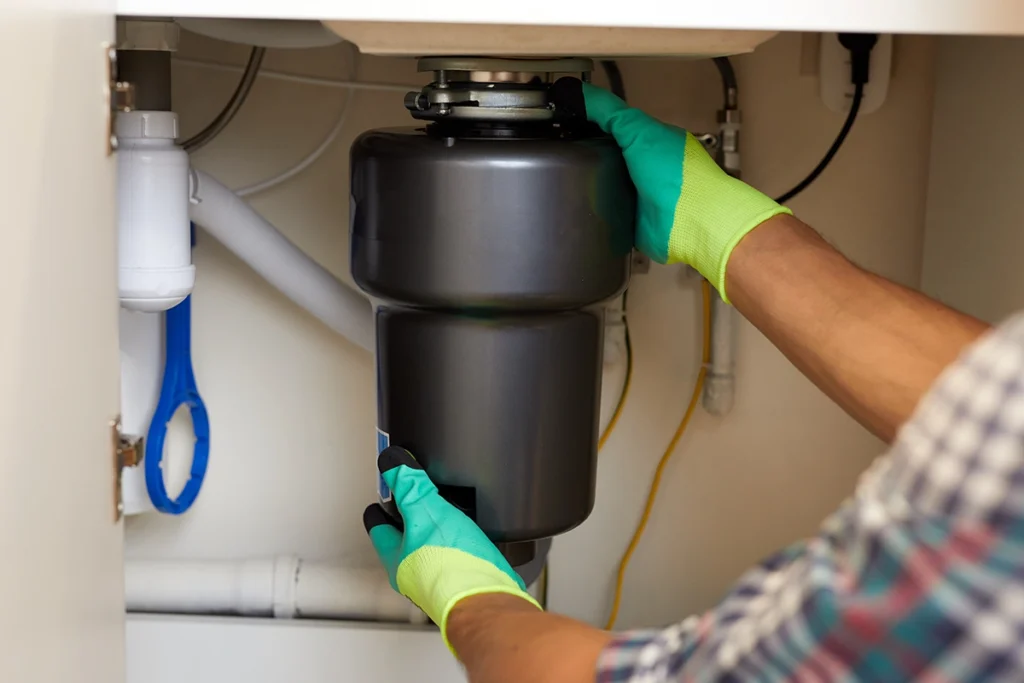
If your garbage disposal is humming but not grinding, the motor is running but the blades aren’t spinning — and that almost always means something has jammed the flywheel or the disposal has seized internally. Most homeowners assume the unit itself has simply failed. In our experience, though, a garbage disposal humming is usually a symptom of a deeper issue. Something went into the drain that shouldn’t have, the unit wasn’t sized correctly for the household’s use, or a drainage restriction downstream has been forcing the motor to work harder than it was designed to handle. When only the disposal gets replaced without addressing what caused the jam or overload in the first place, the new unit often hums or fails again within months. We walk North Shore homeowners through what’s really happening, what warning signs indicate it’s time to call a professional, and how a licensed plumber finds and fixes the root cause so the problem doesn’t come back.
Why Your Garbage Disposal Is Humming
When you flip the switch and hear a humming sound instead of the usual grinding, it means the motor is receiving power but the flywheel and impeller blades inside are stuck and can’t turn. Most often, the cause is a hard object — like a bone fragment, utensil, or piece of glass — wedged between the flywheel and the housing. Food buildup that has hardened around the blades over time can also cause the jam. In some cases, the motor itself has seized from age, corrosion, or bearing wear, especially if the unit has run without enough water to cool and lubricate the moving parts.
For authoritative guidance, consult the EPA WaterSense program.
A humming disposal rarely fixes itself. Continuing to flip the switch can overheat the motor and trip its internal thermal cutoff or burn out the windings completely. If the humming persists, the switch should remain off to prevent damage until a professional can inspect it.
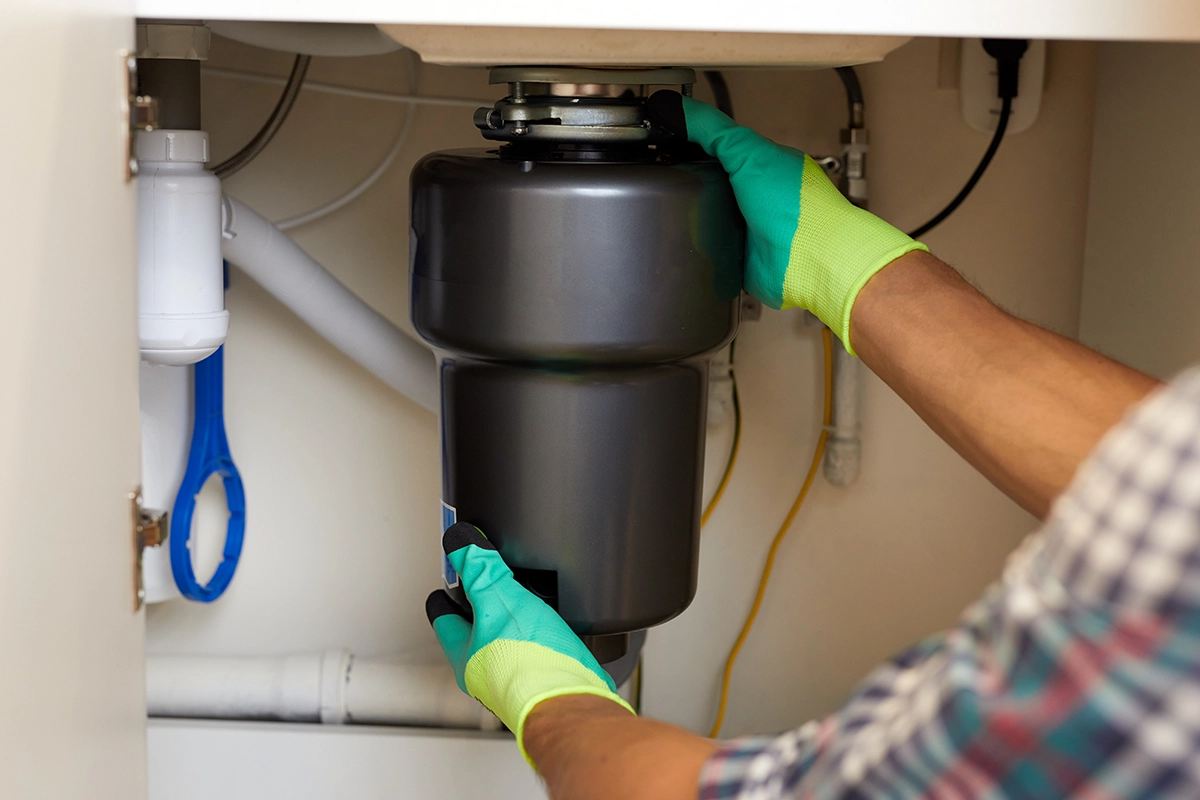
When we respond to a garbage disposal humming, we first confirm power and reset status. Then we check for jams by rotating the flywheel manually with a specialty tool. If the jam clears, we test the unit under water flow to make sure the bearings and seals are sound. If the motor has seized or the flywheel is corroded in place, we’ll walk you through replacement options and install a unit that matches your household’s use and your sink’s plumbing configuration.
What Causes a Garbage Disposal to Hum
This happens especially if you’ve run the disposal continuously for more than a minute or pushed too much waste through at once.
Less commonly, the motor windings themselves have failed, or the capacitor that helps the motor start has burned out. Each of these scenarios prevents the flywheel—the rotating disc that forces waste against the grinder—from turning, even though electrical current is reaching the unit.
A disposal that hums is telling you something upstream has gone wrong before the unit ever reached the point of failure. A jam often means the wrong materials went down the drain: coffee grounds, eggshells, potato peels, grease, or expandable foods like pasta and rice. These create friction and resistance that wear down the motor bearings and overwork the impeller plate.
Electrical issues can also starve the motor of the voltage it needs. A weak circuit, loose wiring at the switch, or a breaker that’s starting to fail will cause the motor to stall and hum instead of spin. If the motor has overheated repeatedly, the windings inside degrade until they can no longer generate enough magnetic force to turn the shaft.
When we respond to a humming disposal, we first verify that the circuit is delivering proper voltage. We also check that the reset button on the bottom of the unit hasn’t tripped. Then we inspect the chamber for jams and check whether the flywheel can be manually rotated. If the motor itself has failed, we measure continuity across the windings and test the capacitor. Replacing the disposal without understanding what caused the failure—overloading, improper waste, or electrical supply problems—means the new unit will likely face the same fate. That’s why we always identify the root cause before recommending repair or replacement.
Warning Signs You Need Professional Help
If your garbage disposal is humming but not grinding, there are warning signs that indicate it’s time to call a licensed plumber rather than attempt any troubleshooting on your own:
- Humming that continues after the unit has been off for several minutes
- Water leaking from the disposal body
- Burning smell when the motor runs
- Tripping breaker each time you flip the switch
- Visible obstruction inside the disposal chamber (silverware, bottle caps, bones, or other hard objects wedged in the grinding ring)
- Reset button popped out on the bottom of the unit
- Water pooling underneath the sink or loose connections
A humming sound that continues typically means something has jammed the flywheel or the motor has seized internally. Forcing the motor to run in that state can burn out the windings or trip the overload repeatedly. When you notice leaking, burning smells, or breaker trips, those are all signs that internal damage has already begun.
If you can see an object wedged in the grinding ring when you shine a flashlight down from above, the flywheel cannot turn. Never reach into the disposal with your hand, even when it’s off—the blades and housing have sharp edges, and accidental startup can cause serious injury. If you can see an object but can’t safely remove it from above without tools or disassembly, that’s a job for a professional plumber.
If you see active leaking or loose plumbing, leave the unit off and call us—running it will make the problem worse. You don’t have to diagnose this on your own. Our North Shore team will respond quickly to inspect the blockage, motor fault, or upstream cause and get your kitchen back to normal.
When to Call Whale Worth It for Help
If your garbage disposal is humming and you’ve turned off the switch to prevent further motor damage, it’s time to bring in a licensed plumber. The problem usually means something has jammed the flywheel or impeller assembly. The longer the motor is allowed to struggle, the greater the risk of permanent damage to the windings, bearings, or seals. We also recommend calling right away if the unit trips your circuit breaker repeatedly, emits a burning odor, or shows any sign of water leaking from the housing—these indicate that internal components have already begun to fail.
When we respond to a garbage disposal humming, we first check what’s jamming the mechanism and whether the motor or seals have already suffered damage from the blockage. If the jam is fresh and the motor is still healthy, we can often clear it and restore full function. On the other hand, if the overload has tripped too many times or the housing is leaking, replacement is usually the safer, longer-lasting solution. Either way, we’ll walk you through exactly what we find and provide a detailed estimate before any work begins.
You don’t have to troubleshoot this on your own. Our North Shore team will assess the situation so you know exactly what’s needed and what it will take to fix it. Give us a call, and we’ll take care of the rest.
Frequently Asked Questions
Why is my garbage disposal humming but not spinning?
The flywheel is jammed by a hard object or the motor has seized, so power reaches the unit but the blades can’t turn. A bone fragment, utensil, or hardened food buildup wedged between the flywheel and housing is the most common cause. Overheated motors and failed capacitors also prevent rotation and produce the same humming sound.
Can I fix a humming garbage disposal myself?
A humming disposal typically indicates a jam or seized motor that requires professional tools and expertise to clear safely. Attempting to force the motor, disassemble the unit, or reach inside the grinding chamber can cause injury or further damage to the disposal’s internal components. Because of these risks, we recommend calling a licensed plumber to diagnose the jam, test the motor, and identify what caused the failure.
What should I do when my garbage disposal just hums?
Turn off the switch immediately to prevent motor damage. Then contact a licensed plumber for an inspection. Continuing to run a jammed or seized motor can burn out the windings and force a full replacement. Avoid reaching into the disposal or attempting to force the flywheel, as this can cause injury or worsen the internal damage.
Will a new garbage disposal hum again if I just replace the old one?
Yes, if the root cause—wrong materials down the drain, undersized unit, drainage restrictions, or electrical supply problems—isn’t identified and corrected first. We diagnose why the original disposal jammed or seized before recommending replacement. As a result, the new unit is properly sized, installed correctly, and won’t fail from the same upstream issue that damaged the first one.