If you notice white buildup around faucets, spotty dishes, or laundry that feels stiff after washing, your home may have hard water. A whole house water softener treats the water as it enters your home, helping reduce the minerals responsible for these everyday problems. For homeowners on the North Shore, installing the right system can improve daily water use while protecting plumbing fixtures and water-using appliances.
What Is a Whole House Water Softener?
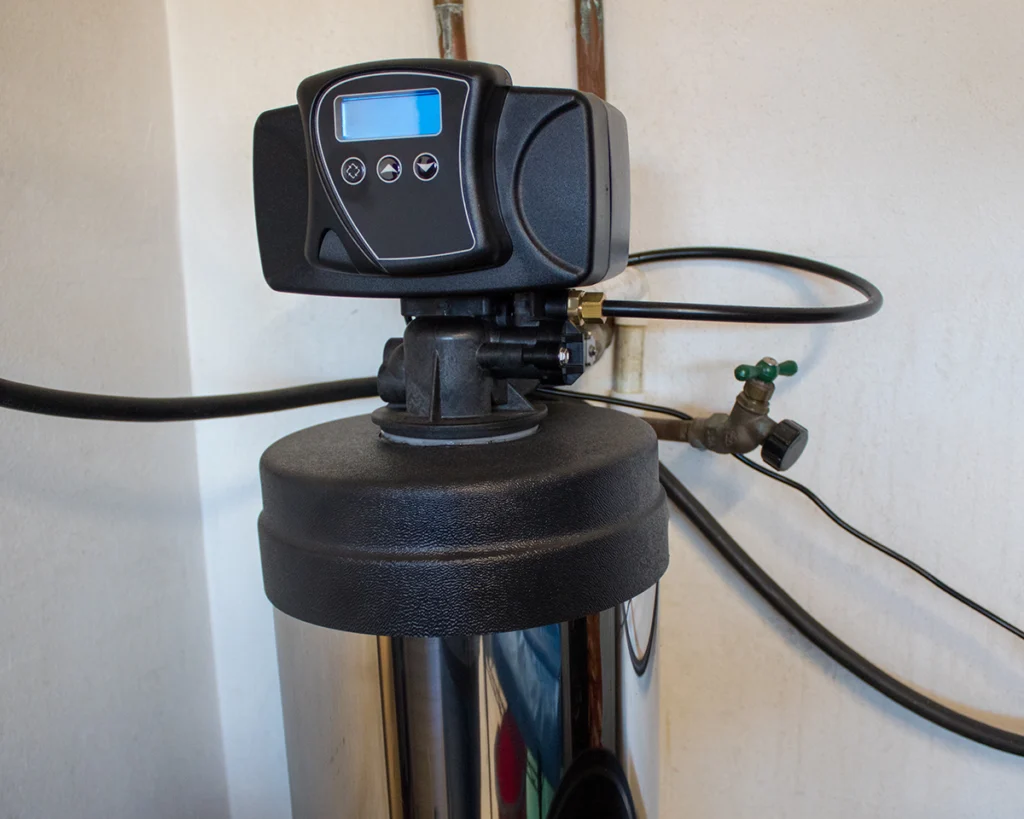
A whole house water softener is installed along your home’s main water line. Unlike a point-of-use filter that treats water at one faucet, it softens water before it reaches your sinks, showers, washing machine, dishwasher, and water heater.
According to the CDC, water softeners remove minerals such as calcium and magnesium that cause hard water, scale buildup, and difficulty producing a soap lather. Most salt-based systems accomplish this through ion exchange. Inside the softener tank, resin beads attract the hardness minerals and replace them with a small amount of sodium before sending the treated water throughout your home.
Signs Your Home Could Benefit from Water Softening
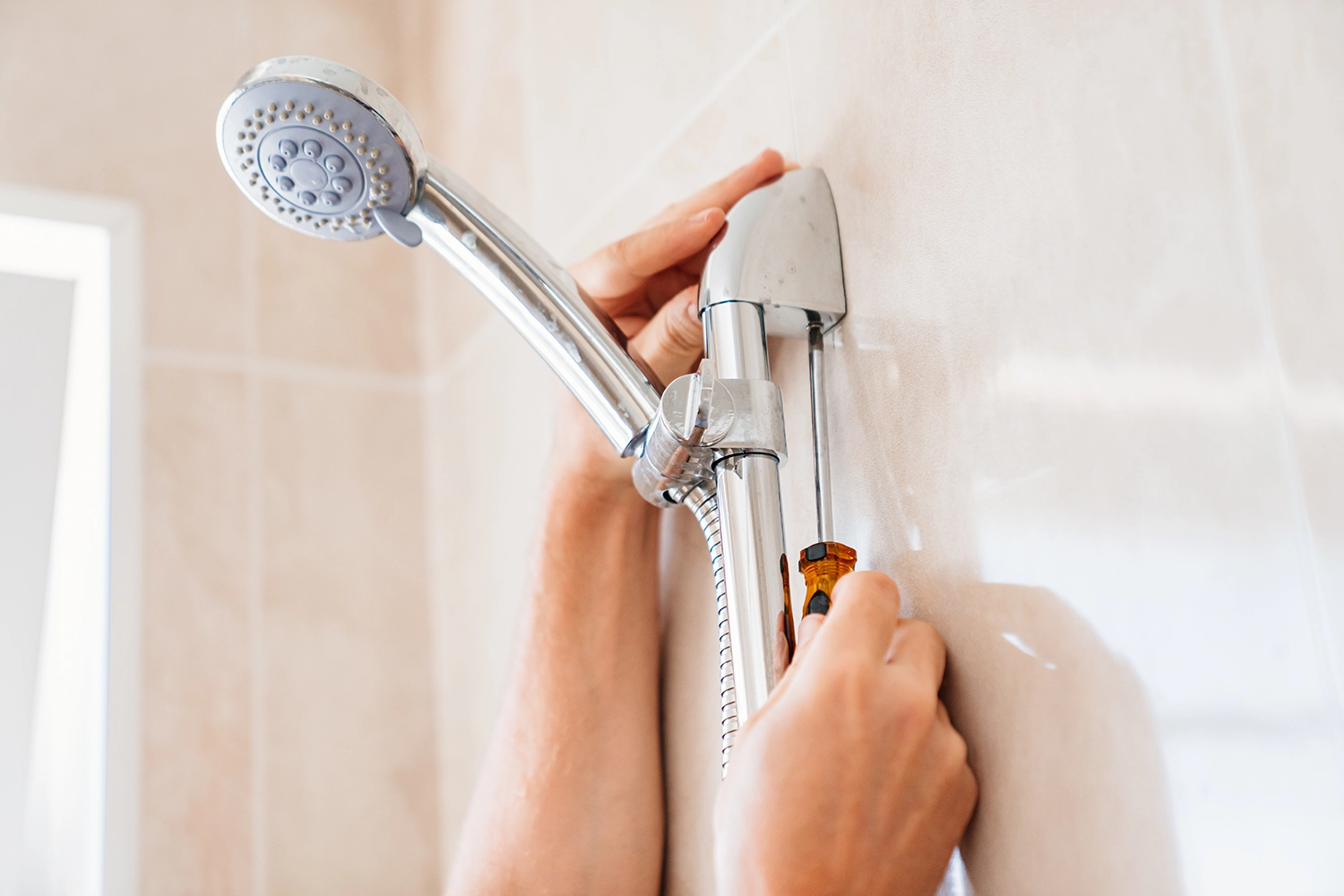
Hard water often leaves visible evidence around the home. You may notice chalky deposits on faucets and showerheads, cloudy glassware, soap scum on shower doors, or bathtub rings that quickly return after cleaning. Soap and shampoo may also produce less lather, while towels and clothing can feel stiff after washing.
Hard water can also affect personal comfort. Some homeowners notice that their skin feels dry after showering or that their hair looks dull and difficult to manage. A professional water hardness test can confirm whether mineral levels are high enough to make a water softener beneficial.
How a Whole House Water Softener Works
A water softener continuously treats incoming water as it passes through a mineral tank filled with resin beads. Calcium and magnesium attach to the beads, allowing softened water to continue into the home.
Over time, the resin beads become saturated with minerals. The system then begins a regeneration cycle using water and salt stored in a separate brine tank. This process rinses away the collected minerals and prepares the resin beads to soften water again. Modern control valves can schedule regeneration based on household water use, helping limit unnecessary salt and water consumption. Like other home water treatment equipment, softeners also require routine care, and following a consistent water filtration maintenance schedule can help homeowners keep related systems working properly.
Benefits of Installing a Whole House System
One of the most noticeable benefits of softened water is easier cleaning. Soap and detergent lather more effectively, dishes are less likely to develop cloudy spots, and mineral deposits form less frequently around faucets and showerheads. Many homeowners also prefer how softened water feels when bathing and washing their hair.
A water softener can also reduce scale inside pipes and water-using appliances. This may help water heaters, dishwashers, washing machines, and plumbing fixtures operate more efficiently while reducing mineral-related wear. Homes with tankless units may still need periodic tankless water heater maintenance to remove existing deposits and keep the equipment operating properly. Although a softener cannot correct damage that has already occurred, it can help limit additional scale accumulation.
Choosing the Right Whole House Water Softener
The correct softener depends on more than the size of your home. Water hardness, daily water consumption, household size, and peak water demand all affect the capacity your system needs. A smaller household with moderately hard municipal water will have different requirements than a larger family using severely hard well water.
Your plumbing layout also matters. Installation planning should account for the main water line, available floor space, drainage access, electrical connections, and the location of the water heater. Testing your water before selecting equipment helps ensure the system can address its specific mineral content without wasting salt or water.
Professional Installation and What to Expect
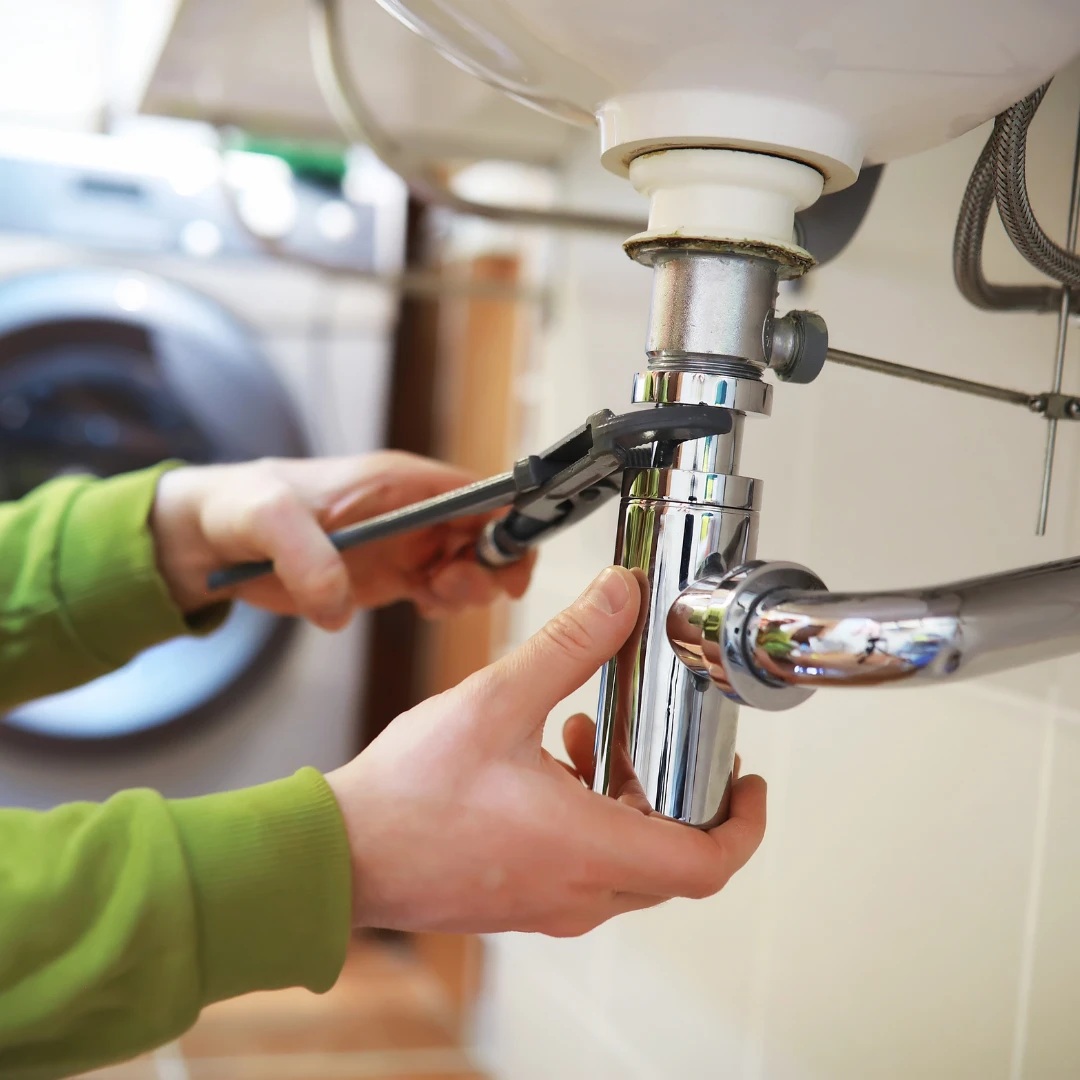
Installation begins with an evaluation of your plumbing system and the intended equipment location. A licensed plumber will identify the main water line, confirm adequate drainage and electrical access, and determine where the bypass valve and tanks should be positioned.
The plumber will then connect the softener to the main line, route the regeneration drain, and program the system according to your water hardness and household usage. After installation, the system should be checked for leaks, pressure changes, and proper regeneration. You should also receive instructions for monitoring salt levels, using the bypass valve, and recognizing when the unit may need service.
Schedule Whole House Water Softener Installation
Hard water can affect everything from your daily cleaning routine to the performance of your plumbing and appliances. If you are considering a whole house water softener, our licensed plumbers can test your water, evaluate your household’s needs, and recommend a properly sized system.
Contact us today to schedule a water quality assessment or request more information about whole house water softener installation for your North Shore home.
Frequently Asked Questions
How much does a whole house water softener cost to install?
Installation costs vary based on system capacity, your home’s plumbing configuration, and local code requirements. We evaluate your water hardness, household size, and existing plumbing during our consultation. This allows us to provide an accurate estimate. Contact us for a free water test and personalized quote tailored to your North Shore home’s specific needs.
How often do I need to add salt to my water softener?
Most systems need salt replenishment every 6-8 weeks. However, usage varies with household size and water hardness. We recommend checking your brine tank monthly and adding salt when the level drops below halfway. We program your regeneration cycles during installation to maximize efficiency and minimize waste. This is based on your actual consumption patterns.
Will a whole house water softener remove iron from my water?
Standard ion-exchange softeners remove small amounts of dissolved iron, typically up to 3-5 parts per million. Higher iron concentrations require specialized filtration or pre-treatment before softening. We test your water chemistry to determine whether a softener alone will solve your problem. You may need additional treatment for complete protection.
Can I use softened water for drinking and cooking?
Yes, softened water is safe for most people. However, it contains slightly more sodium from the ion-exchange process. If you’re on a sodium-restricted diet, we can install a dedicated unsoftened tap for drinking water. Our licensed plumbers help you design a system that balances whole-house protection with your family’s health preferences.