If your home uses a private well, you may have wondered, how does well water work without a municipal water line? Instead of receiving treated water from a town or city, your property draws groundwater from beneath the surface. A pump then moves that water into your plumbing system so it is available whenever you open a faucet.
At Whale Worth It! Plumbing, Heating & Air, we work with plumbing systems throughout the North Shore, MA. Well systems can seem complicated at first. However, the basic process is fairly straightforward once you understand the main components.
From the well itself to the pump and pressure tank, each part has a specific job. Water quality equipment may also play an important role depending on the conditions at your property.
How Does Well Water Work Below Your Property?
A private well begins with groundwater.
Rain and melting snow soak into the soil and move through layers of earth and rock. Eventually, some of that water collects underground in spaces within soil, sand, gravel, or rock formations.
These groundwater-bearing formations are often called aquifers.
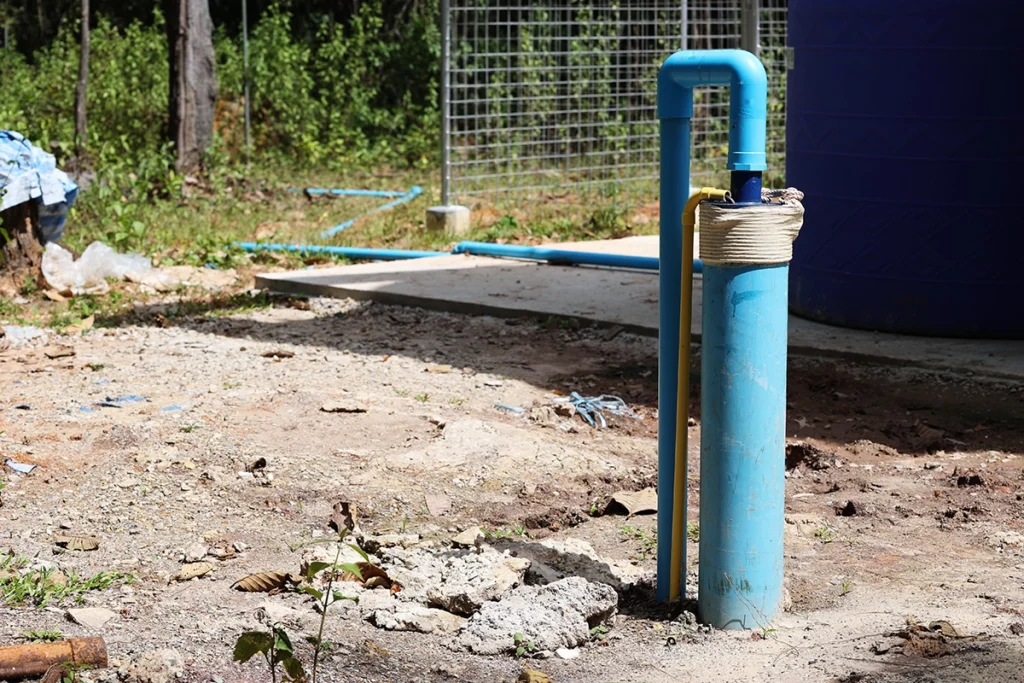
A well is drilled deep enough to reach a dependable groundwater supply. A casing is then installed inside the well opening. This helps stabilize the well and limits surface material from entering it.
Water naturally enters the lower portion of the well. From there, a pump moves it toward the house.
According to the U.S. Environmental Protection Agency, more than 13 million U.S. households rely on private wells for drinking water. Unlike public water systems, private wells generally remain the property owner’s responsibility.
The Well Pump Moves Water Into Your Home
The pump is one of the most important parts of the system.
Most modern residential wells use a submersible pump located inside the well. It sits below the water level and pushes water upward through a pipe.
Some shallower wells may use a jet pump instead. These pumps are usually installed above ground and pull water from the well.
When water pressure inside the home drops, the pump receives a signal to turn on. It then sends more water into the plumbing system.
However, the pump usually does not run every time someone briefly opens a faucet. That is where the pressure tank becomes important.
How Does Well Water Work With a Pressure Tank?
If you are asking how does well water work without the pump constantly cycling, the pressure tank is a major part of the answer.
The tank stores a pressurized supply of water. Inside the tank, water and compressed air work together to maintain pressure throughout the plumbing system.
When you turn on a faucet, water initially comes from the pressure tank. As the water level drops, pressure inside the tank falls.
Once pressure reaches a preset level, the pressure switch activates the well pump. The pump refills the tank until the system reaches its upper pressure setting.
Then, the pump shuts off again.
This cycle helps provide steady water pressure. It also reduces unnecessary starts and stops that could wear out the pump.
If pressure suddenly becomes weak throughout the house, several issues could be responsible. A failing pressure tank, pump problem, clogged filter, or plumbing restriction may all reduce flow. Similar problems can also contribute to low water pressure at individual fixtures.
What Happens When You Turn On a Faucet?
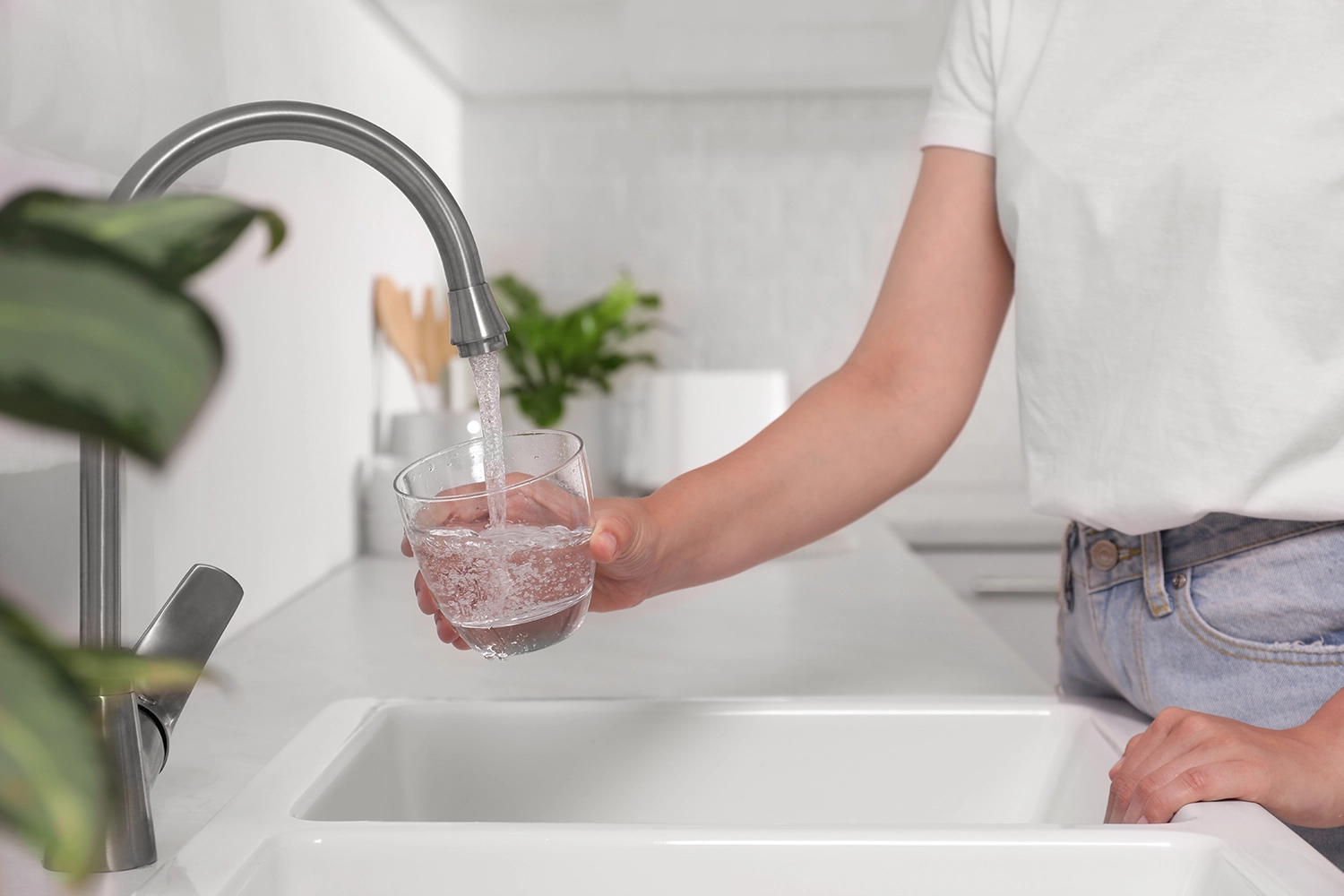
Once the well system is pressurized, using water feels much like using municipal water.
You turn on a faucet, and pressure pushes water through your home’s supply lines. The pressure tank supplies water first.
If enough water is used, pressure eventually drops to the pump’s cut-in setting. The pump then turns on and replenishes the system.
For example, taking a shower may cause the pump to cycle during use. Running several fixtures at once can also make the pump operate more frequently.
Once those fixtures are closed, the pump finishes bringing the system back to full pressure.
Ideally, you should barely notice this process.
How Does Well Water Work With Water Treatment?
Another important part of understanding how well water works involves water quality.
Groundwater can naturally contain minerals and other substances. The specific makeup varies from one property to another.
For example, well water may contain iron, manganese, calcium, magnesium, sulfur compounds, sediment, or other dissolved materials.
As a result, some homes use treatment equipment after water leaves the pressure tank.
A sediment filter may remove suspended particles. Meanwhile, a water softener can reduce hardness minerals such as calcium and magnesium.
Other properties may need specialized filtration depending on test results.
For instance, homeowners with hard groundwater may benefit from a whole-house water softener. Proper treatment can also reduce scale buildup on fixtures and plumbing components.
Whatever equipment is installed, maintenance matters. Filters eventually collect sediment and other material. Therefore, regular water filtration maintenance helps maintain proper flow and treatment performance.
Why Well Water Should Be Tested Regularly
Water can look perfectly clear and still contain substances you cannot see, smell, or taste.
Because private wells are not maintained like public water systems, testing becomes especially important.
Water quality can also change over time. Flooding, construction, nearby land use, changes underground, or problems with the well itself may affect groundwater.
Testing may also be appropriate after well repairs or when you notice changes in taste, smell, or appearance.
For example, sulfur-related odors can make water smell unpleasant. However, the source of that odor can vary. If you notice a rotten-egg smell, it is worth determining why your water smells like rotten eggs rather than assuming the well itself is failing.
Your testing schedule should reflect local conditions, your well’s history, and recommendations from appropriate state or local authorities.
Common Problems With Private Well Systems
Private wells can provide dependable water for decades. Still, the equipment involved eventually needs service.
One common issue is short cycling. This occurs when the pump turns on and off too frequently.
A damaged pressure tank bladder or incorrect air charge can cause this problem. Additionally, pressure switch issues may interfere with normal cycling.
Low pressure is another frequent concern. A clogged filter, worn pump, failing pressure tank, or restriction in the plumbing may reduce water flow.
Sediment can also appear in the water. Sometimes this indicates a filtration issue. In other situations, changes inside the well may be contributing.
You may also notice unusual sounds around the pressure tank or pump controls.
Because several problems can create similar symptoms, diagnosing the entire system is often more useful than replacing one component based on a guess.
How Does Well Water Work During a Power Outage?
One difference between municipal water and private well water becomes especially noticeable when electricity goes out.
Most well pumps need electricity to operate.
Therefore, the pump cannot refill the pressure tank during an outage unless you have backup power. However, you may still have a limited amount of water available.
That water comes from the pressure already stored in the tank.
Once the tank pressure falls far enough, water flow will decrease or stop until power returns.
For homes that depend heavily on well water, a properly sized backup generator may help keep the pump operating during outages.
However, electrical requirements vary by pump. Therefore, backup equipment should be matched correctly to the system.
Well Water and Plumbing on the North Shore
Homes across the North Shore can have very different plumbing and water systems.
Some properties use municipal water, while others depend on private wells. Even among well systems, equipment age and configuration can vary considerably.
For example, one home may have a basic well pump and pressure tank. Another may include softening, sediment filtration, or additional treatment equipment.
Water chemistry can also affect plumbing materials. Minerals and certain water conditions may contribute to buildup or corrosion over time.
That means well performance and household plumbing should often be evaluated together.
If pressure changes suddenly, water becomes discolored, or fixtures develop recurring mineral buildup, the issue may not be isolated to one faucet.
Signs Your Well System May Need Professional Attention
You do not need to understand every component to recognize when something is wrong.
Consider scheduling an inspection if you notice:
- A sudden drop in water pressure
- Pressure that frequently rises and falls
- A pump that seems to run constantly
- Rapid pump cycling
- Air or sputtering from faucets
- Sediment or discoloration
- New or unusual water odors
- Unexplained changes in water quality
- No water from any fixture
A plumbing issue can sometimes mimic a well problem. Likewise, a well-system problem can appear to be ordinary plumbing trouble.
For that reason, looking at the complete system often helps identify the real cause faster.
Keep Your Well Water System Working Reliably
So, how does well water work? Groundwater enters the well, a pump moves it toward your home, and a pressure tank maintains usable water pressure. From there, your plumbing distributes water wherever you need it.
Filtration or water treatment equipment may also condition the water before it reaches your fixtures.
Although the process happens automatically, the equipment still needs attention. Pumps, pressure tanks, filters, valves, and plumbing components can all develop problems over time.
At Whale Worth It! Plumbing, Heating & Air, we help homeowners throughout the North Shore keep their plumbing and water systems working properly. If your water pressure changes, your water quality seems different, or you suspect a problem with your plumbing system, contact us today to schedule service.
Frequently Asked Questions
How does well water get into a house?
A well pump moves groundwater from the well through a supply pipe toward the house. A pressure tank then stores pressurized water and helps maintain steady flow at faucets and fixtures.
Does a well pump run every time you use water?
Not necessarily. The pressure tank supplies a stored amount of pressurized water first. Once system pressure falls to a preset level, the pressure switch activates the well pump.
Can you run out of water with a private well?
Yes. A well may temporarily produce less water if groundwater levels drop or household demand exceeds the well's recovery rate. Pump or equipment problems can also cause a loss of water.
Does well water need to be filtered?
Not every well requires the same treatment. Water testing can identify minerals, sediment, or other substances that may require filtration, softening, or another type of water treatment.