You’re standing in your basement looking at a bulky forty-gallon water heater that’s been running for fifteen years. You’re wondering whether a compact tankless unit might be a smarter long-term choice for your home. The tankless vs tank water heater comparison comes down to energy efficiency, installation costs, hot-water demand, available space, and long-term maintenance. Tankless models can reduce energy consumption and provide continuous hot water within their rated capacity. Traditional storage water heaters generally cost less upfront and may be easier to install when your home already has compatible connections. Neither option is automatically better for every North Shore household.
Tankless systems may be especially appealing when space is limited or you’re looking to reduce long-term energy consumption. However, the higher installation costs and possible utility upgrades deserve consideration. Traditional tank models can also provide reliable performance, particularly when properly sized for your household’s needs. At Whale Worth It! Plumbing, Heating & Air, we help homeowners compare both systems and understand which option makes the most sense for their property.
Tankless vs Tank Water Heater: The Core Difference
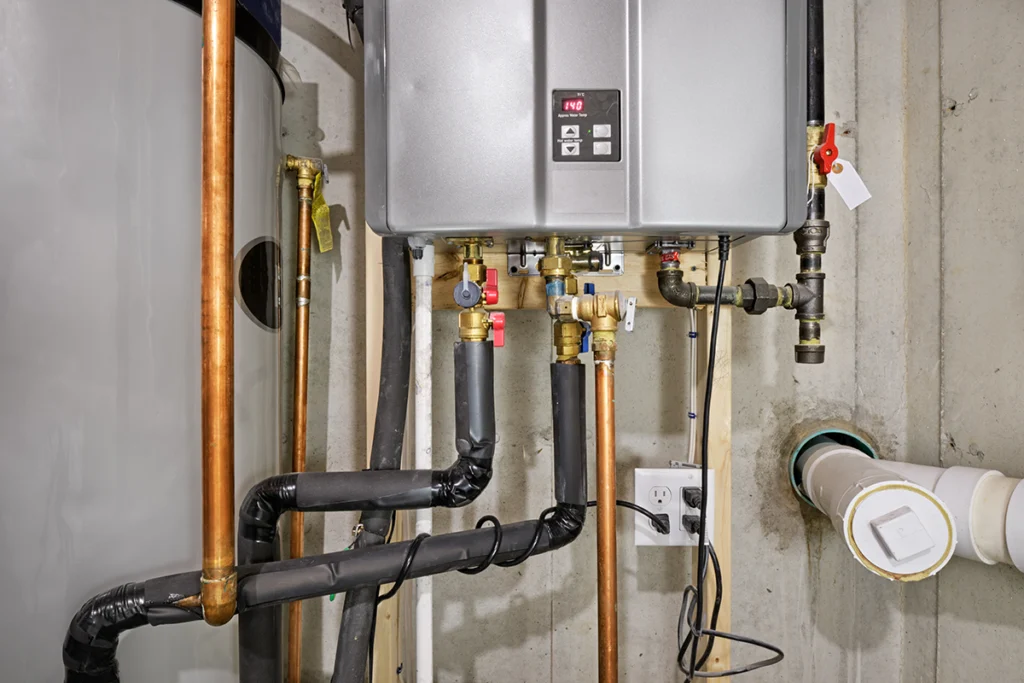
When you’re deciding between a tankless and a traditional tank water heater, the fundamental difference is how each system delivers hot water to your home. A conventional storage water heater keeps a supply of heated water in an insulated tank, ready for use when you turn on a faucet. Tankless models heat water as it flows through the unit, using a gas burner or electric heating element. The heating process activates when hot water is requested and stops when demand ends.
That difference affects energy consumption, hot-water availability, and installation requirements. Storage tanks experience standby heat loss as stored water gradually cools, even when no one is using hot water. Tankless models avoid much of that loss because they don’t maintain a large reservoir of heated water. However, they must be capable of heating enough water to meet your household’s demand as it flows through the system.
According to the U.S. Department of Energy, tankless water heaters can be 24% to 34% more energy efficient than conventional storage models in homes using 41 gallons or less of hot water daily. The potential efficiency advantage decreases as daily hot-water consumption increases. Actual operating costs also depend on the type of equipment, fuel source, and household usage.
Each design has advantages and limitations. Storage water heaters can supply several fixtures from their heated reserve until the tank begins running low. Tankless systems can provide continuous hot water, but only within their rated heating and flow capacity. When we evaluate your home, we consider peak demand, incoming water temperature, existing utility connections, and available installation space. These factors help determine which system is the better fit.
Comparing Efficiency and Operating Costs
Energy efficiency is one of the biggest factors in a tankless vs tank water heater comparison. Traditional storage heaters use energy to heat water and maintain its temperature inside the tank. Even when no hot water is being used, some heat gradually escapes through the tank and connected piping. Tankless systems heat water as needed, avoiding much of the standby loss associated with stored water.
However, the difference in efficiency depends on the equipment being compared. A high-efficiency gas tankless heater may use less energy than a conventional gas storage model. Electric resistance tankless heaters generally have a smaller efficiency advantage over electric resistance storage heaters because both technologies convert electricity into heat efficiently. Heat pump storage water heaters are another consideration, as they can use considerably less electricity than conventional electric resistance models.
The U.S. Department of Energy explains that heat pump water heaters can be two to three times more energy efficient than conventional electric resistance water heaters. This means homeowners comparing electric systems should consider more than just tankless versus traditional resistance-heating equipment.
Your actual utility costs depend on fuel prices, household demand, equipment efficiency, and how frequently hot water is used. A tankless model may reduce energy consumption, but those savings don’t automatically offset its higher installation cost. We evaluate these factors together so homeowners can understand the potential financial benefits before choosing a system.
What Affects Long-Term Operating Cost
Long-term water heater costs involve more than monthly energy bills. Equipment price, installation requirements, maintenance, and expected service life all influence the total investment. Tankless water heaters generally cost more upfront, particularly when converting from a conventional storage system. However, their longer potential lifespan and reduced standby losses may help offset some of that expense over time.
Fuel type also matters. Gas and electric water heaters have different operating costs depending on local utility rates and equipment efficiency. For example, replacing an existing gas storage heater with a high-efficiency gas tankless model may offer a different financial outcome than switching from an electric storage heater to electric tankless equipment.
Maintenance expenses should also be considered. Tankless heat exchangers may require periodic descaling, particularly in homes with mineral-rich water. Traditional tanks need maintenance as well, including inspection of components that protect against corrosion. Neglecting either system can reduce efficiency and contribute to premature equipment problems.
The overall cost of tankless versus traditional water heater installation can vary significantly depending on existing plumbing, utility connections, and equipment requirements. When we assess a replacement, we compare these expenses alongside estimated operating costs. This helps homeowners make a decision based on the full cost of ownership rather than equipment price alone.
Installation Requirements and Complexity
Installing a tankless water heater can involve more infrastructure changes than replacing an existing storage tank. However, the requirements depend on whether the new unit uses gas or electricity. Gas tankless models may need increased fuel supply capacity, different venting, and condensate drainage for condensing units. Electric tankless models can require substantial electrical capacity, including dedicated circuits or panel upgrades. Not every installation needs these modifications, but they should be evaluated before selecting equipment.
Traditional storage water heaters are often simpler to replace when the new model uses the same fuel type and fits the existing space. However, changes in equipment dimensions, efficiency ratings, venting, or safety requirements can still require modifications. A replacement shouldn’t be assumed to be a direct swap without checking the installation conditions.
Water quality is another important consideration. Mineral deposits can accumulate inside water heaters, particularly in homes with hard water. Tankless heat exchangers may be especially sensitive to scale because of their narrow internal water passages. Depending on water hardness and manufacturer requirements, treatment or more frequent maintenance may be recommended.
Professional tankless water heater service can include inspecting filters, checking system performance, and removing mineral deposits when necessary. Traditional tanks also benefit from periodic inspections, flushing when appropriate, and checking corrosion protection components. Maintenance requirements vary by system, so homeowners should follow the manufacturer’s recommendations.
When we assess an installation, we evaluate the plumbing layout, available fuel or electrical capacity, water quality, and equipment placement. We also consider venting requirements and your household’s peak hot-water demand. This helps us recommend a system that can operate safely and reliably within your home’s existing infrastructure.
Let Whale Worth It Help You Choose
Choosing between tankless and traditional water heaters isn’t a one-size-fits-all decision. The right option depends on your home’s plumbing configuration, available space, energy source, and hot-water demand. Your long-term plans and budget also play an important role.
At Whale Worth It! Plumbing, Heating & Air, we help homeowners throughout the North Shore evaluate both systems. Our licensed plumbers assess existing utility connections, equipment placement, incoming water temperature, and household usage patterns. We explain the installation requirements and discuss the advantages and limitations of each option.
Whether you’re replacing an aging storage tank or considering a tankless upgrade, our water heater installation and replacement services can help you choose appropriate equipment. We’ll review the available options, explain any necessary modifications, and provide recommendations based on your home’s needs.
The tankless vs tank water heater comparison ultimately comes down to finding the right balance between performance, installation costs, and long-term value. Contact Whale Worth It! to schedule a consultation and find out which water heating system makes the most sense for your North Shore home.
Tankless Water Heater vs Tank Water Heater: Side-by-Side Comparison
The original table needs to be replaced because the SEER ratings are incorrect and the recommendations based on family size are too generalized.
| Feature | Tankless Water Heater | Tank Water Heater |
|---|---|---|
| Upfront cost | Generally higher | Generally lower for conventional models |
| Installation | May require utility or venting upgrades | Often simpler when replacing a similar unit |
| Energy efficiency | Reduced storage-related standby losses | Varies by technology; heat pump models can be highly efficient |
| Hot-water supply | Continuous within rated flow capacity | Limited by tank capacity and recovery rate |
| Space requirements | Compact, often wall-mounted | Requires room for a storage tank |
| Typical lifespan | Around 20 years with proper care | Often 10–15 years for conventional models |
| Maintenance | Filter checks and descaling as needed | Tank maintenance, including corrosion protection checks |
| Best suited for | Homes prioritizing space savings and continuous hot water | Homes prioritizing lower initial costs or stored hot-water capacity |
Frequently Asked Questions
How long does a tankless water heater last compared to a tank model?
Tankless water heaters can last around 20 years with proper maintenance, while conventional storage models typically last 10 to 15 years. Actual lifespan depends on water quality, usage, and maintenance. Regular servicing helps protect both systems from premature deterioration.
Which is better for a large family: tankless or tank water heater?
Either system can work well for a large family when properly sized. Tankless models provide continuous hot water within their flow capacity, while storage tanks supply water from a heated reserve. We evaluate simultaneous fixture use and household demand to recommend the right option.
In the tankless vs tank water heater comparison, which one saves more money over time?
Tankless models may reduce energy consumption, but their higher installation costs can offset those savings. The better long-term value depends on fuel prices, maintenance, equipment lifespan, and household usage. We compare these factors to help homeowners understand the potential costs.
Can I install a tankless water heater in the same spot as my old tank?
Often, yes. However, the existing location must meet the new unit’s plumbing, electrical or gas, venting, and clearance requirements. Some installations require additional modifications. Our licensed plumbers evaluate the available space and utility connections before recommending equipment.