If you’re weighing tankless vs traditional water heater installation cost, you’re already asking the right question—and we know it can feel overwhelming to compare two systems that work so differently. For most homeowners, traditional tank water heaters come with a lower upfront installation cost because the equipment itself is less expensive and the labor is more straightforward.
Tankless units often cost more initially but offer greater energy efficiency and can have a longer service life than traditional tanks. The best choice depends on your home’s hot water demand, your budget, and how long you plan to stay. We’re here to help you understand what drives the cost of each option so you can make a confident decision.
Why Installation Cost Matters When Choosing a Water Heater
When your water heater reaches the end of its lifespan or you’re building a new home here on the North Shore, the upfront installation expense can feel like the biggest hurdle. But understanding what drives that initial investment helps you see the full picture—and avoid surprises down the road. A tankless unit typically requires more labor and material upfront because we’re often running new gas lines, upgrading electrical panels, or reconfiguring venting to meet current code. A traditional tank, by contrast, usually fits into the same footprint and utility hookups as your old one, which means less labor complexity and a simpler swap.
The factors that shape your quote go far beyond the equipment itself. Our team considers your home’s existing infrastructure—whether your gas meter can supply the BTUs a tankless demands, if your breaker panel has capacity for a high-amperage electric model, and how much pipe or vent routing the job requires. The age of your plumbing, local permit requirements, and whether you need expansion tanks are all part of the assessment.
That’s why we provide a detailed estimate after inspecting your specific setup—no two homes are identical, and the safest, most efficient installation depends on what’s already in place. When you’re weighing tankless vs traditional water heater installation cost, you’re really choosing between a lower immediate outlay and a system that may cost more upfront but often delivers decades of energy savings and space efficiency.
Tankless vs Traditional Water Heater Installation Cost: Key Differences
When you’re deciding between a tankless or traditional water heater, understanding what drives the upfront investment helps you plan wisely. The two systems have different installation requirements, and those differences directly affect cost.
A traditional tank water heater usually requires fewer changes to your existing plumbing and utility connections, especially when replacing a similar unit. We connect the new tank to the existing water lines and gas or electrical supply. The differences between gas and electric water heaters can also affect installation requirements and operating costs.
During installation, we also check the venting and make sure the temperature-pressure relief valve drains correctly.
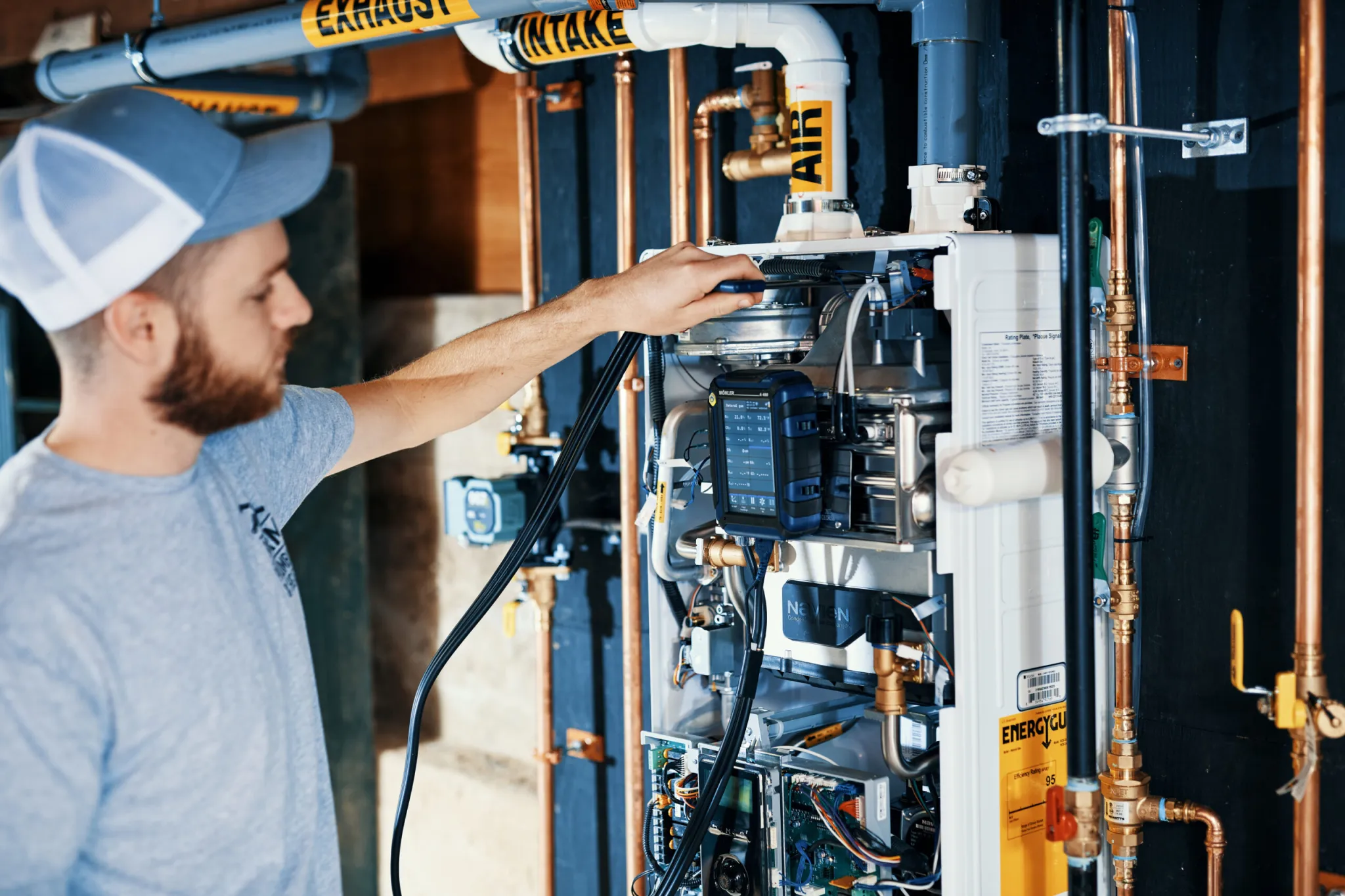
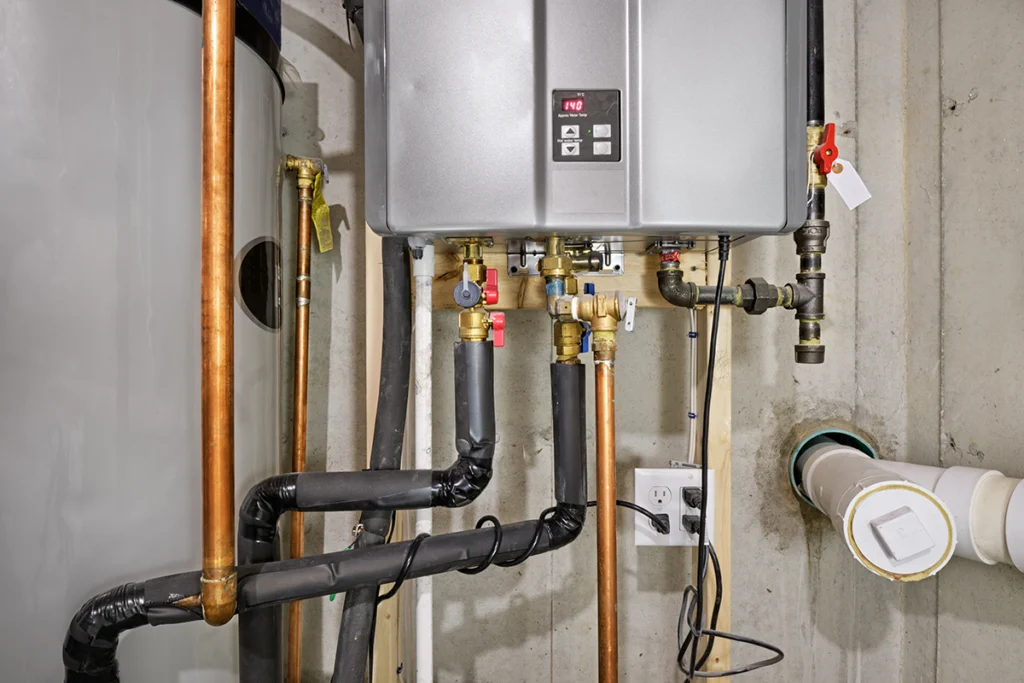
Tankless systems often require more preparation. Because they heat water on demand, your home may need larger gas lines, upgraded electrical connections, or new venting. Some installations also include shut-off valves, inline filters, or a recirculation loop.
Placement matters, too. A tankless unit may be compact, but moving it away from existing plumbing, gas, or electrical connections can increase labor and material costs.
Our team evaluates your current setup, local code requirements, and household hot water demand before explaining what the installation will involve. If you’re weighing your options, schedule a consultation for an estimate based on your home’s specific setup.
What Drives Installation Costs for Each System
When you’re weighing tankless vs traditional water heater installation cost, the quote depends on more than the unit’s price. Your home’s existing plumbing, gas, electrical, and venting setup can significantly affect the final cost.
Traditional tank water heaters often fit into the same space and utility connections as the old unit, especially when you’re replacing it with a similar model. That usually keeps installation simpler. We disconnect the old tank, install the new one, reconnect the water and fuel or electrical supply, and verify that the venting and pressure-relief components meet current requirements.
Tankless systems often require more preparation. Some homes need larger gas lines, new electrical connections, updated venting, or a condensate drain for certain models. Each upgrade adds labor and materials to the project.
Placement matters, too. Installing a tankless unit far from the existing gas, electrical, or plumbing connections can increase the amount of work required. During the estimate, we assess your current setup and determine what changes are needed for a safe, code-compliant installation.
ENERGY STAR-certified water heaters must meet specific efficiency criteria, which can help reduce operating costs depending on the system and your household’s hot water use. That’s why two similar water heaters can have very different installation costs from one home to another.
Get a Professional Assessment and Transparent Quote
You don’t have to figure out which water heater is right for your home on your own. When you reach out to our team, we start with a thorough in-home evaluation that looks at everything affecting your installation. Our licensed plumbers measure your hot water demand based on your household size and usage patterns, inspect your existing gas lines or electrical capacity, review the space available for the unit, and check local code requirements for north shore installations. That assessment gives us the full picture we need to recommend the best system for your situation—whether it’s a tankless unit, a traditional tank, or a hybrid approach.
Once we’ve gathered those details, we provide a detailed written estimate that breaks down the factors shaping your project. We’ll explain what drives the scope of work—things like venting modifications for a tankless system, upgrading electrical service if needed, replacing outdated supply lines, or navigating tight installation spaces. You’ll see exactly what’s included in the installation, what permits are required, and the timeline from start to finish. We stand behind our work with a workmanship warranty, and we can discuss financing options that fit your budget.
We’re here to answer questions—even quick ones. Contact our tankless water heater installation team today to schedule your assessment and get the transparent information you need to move forward with confidence.
Tankless vs Traditional Tank: Side-by-Side Comparison
| Feature | Tankless | Traditional Tank |
|---|---|---|
| Upfront Cost | Higher initial investment required | Lower initial investment required |
| Installation Time | Longer, typically full day | Shorter, few hours typically |
| Efficiency / SEER | Up to 98% energy efficiency | Sixty to seventy percent efficiency |
| Best For | Endless hot water, space-conscious homes | Simultaneous use, predictable hot water needs |
| Lifespan | Twenty years or longer | Ten to fifteen years |
| Maintenance | Annual descaling and filter cleaning | Periodic tank flushing and inspection |
Frequently Asked Questions
Which system costs more to install—tankless or traditional tank water heaters?
Tankless systems typically require a higher upfront investment because installation often involves upgrading gas lines, running new electrical circuits, and installing specialized venting to meet code. Traditional tanks usually fit the existing footprint and utility connections, keeping labor simpler. We assess your home’s infrastructure during our estimate to show exactly what each option entails.
Why does tankless water heater installation cost more than replacing a traditional tank?
Tankless units draw more power or gas in short bursts, so we frequently need to upsize gas piping, add dedicated electrical circuits, and install Category III stainless venting or PVC exhaust. Traditional tanks usually connect to the same paths as your old unit. Each infrastructure upgrade adds labor hours and materials to the tankless project.
Does a tankless water heater save enough on energy bills to offset the higher installation expense?
It can, depending on your hot water use, fuel costs, and installation price. The U.S. Department of Energy notes that gas-fired tankless water heaters avoid the standby energy losses associated with storage tank models. Over time, those savings can help offset the higher upfront cost.
What should I expect during a professional water heater installation estimate?
We inspect your existing gas lines or electrical capacity. Available space and household hot water demand are also part of the assessment. We also check local code requirements for the installation. Then we provide a detailed written estimate. It explains any venting changes, supply-line upgrades, permit needs, and the expected timeline. You’ll know what’s included before any work begins.