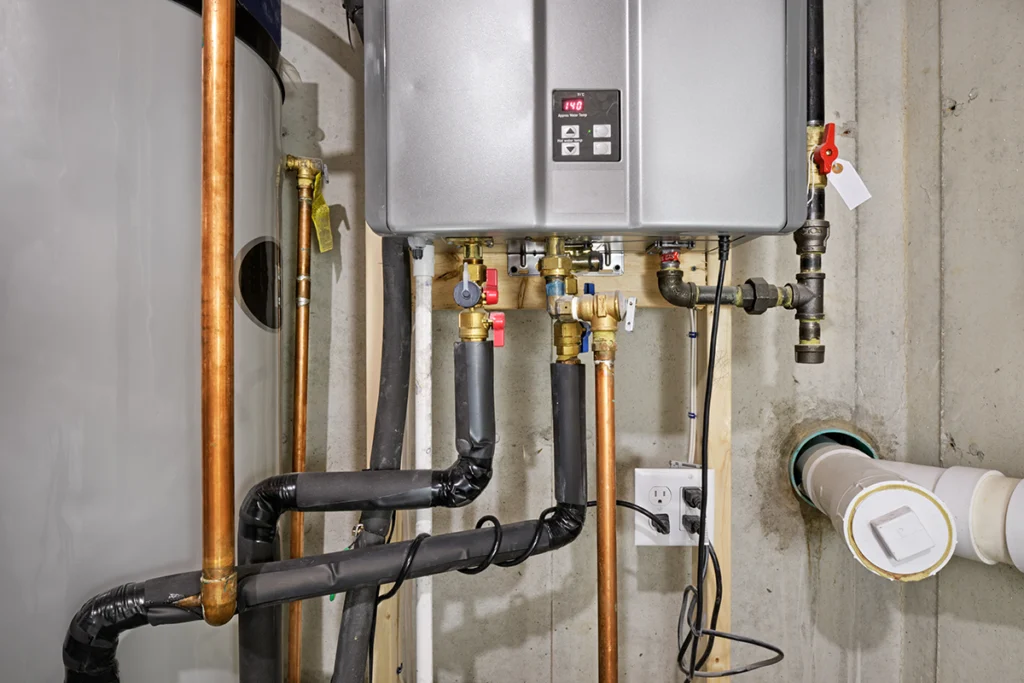
Choosing a new water heater is a big decision for any homeowner. Two of the most energy-efficient options available today are heat pump water heaters and tankless systems. The heat pump water heater vs tankless debate often comes down to your household’s hot water usage, budget, and long-term energy goals. At Whale Worth It! Plumbing, Heating & Air, we help North Shore homeowners navigate these choices every day.
Both systems offer significant advantages over traditional tank water heaters. However, they work in completely different ways and suit different situations. Understanding how each system operates is important. You’ll also want to know what it costs to install and run each option. Finally, learning which one aligns with your home’s needs will help you make a confident choice that keeps your family comfortable for years to come.
How Heat Pump Water Heaters Work
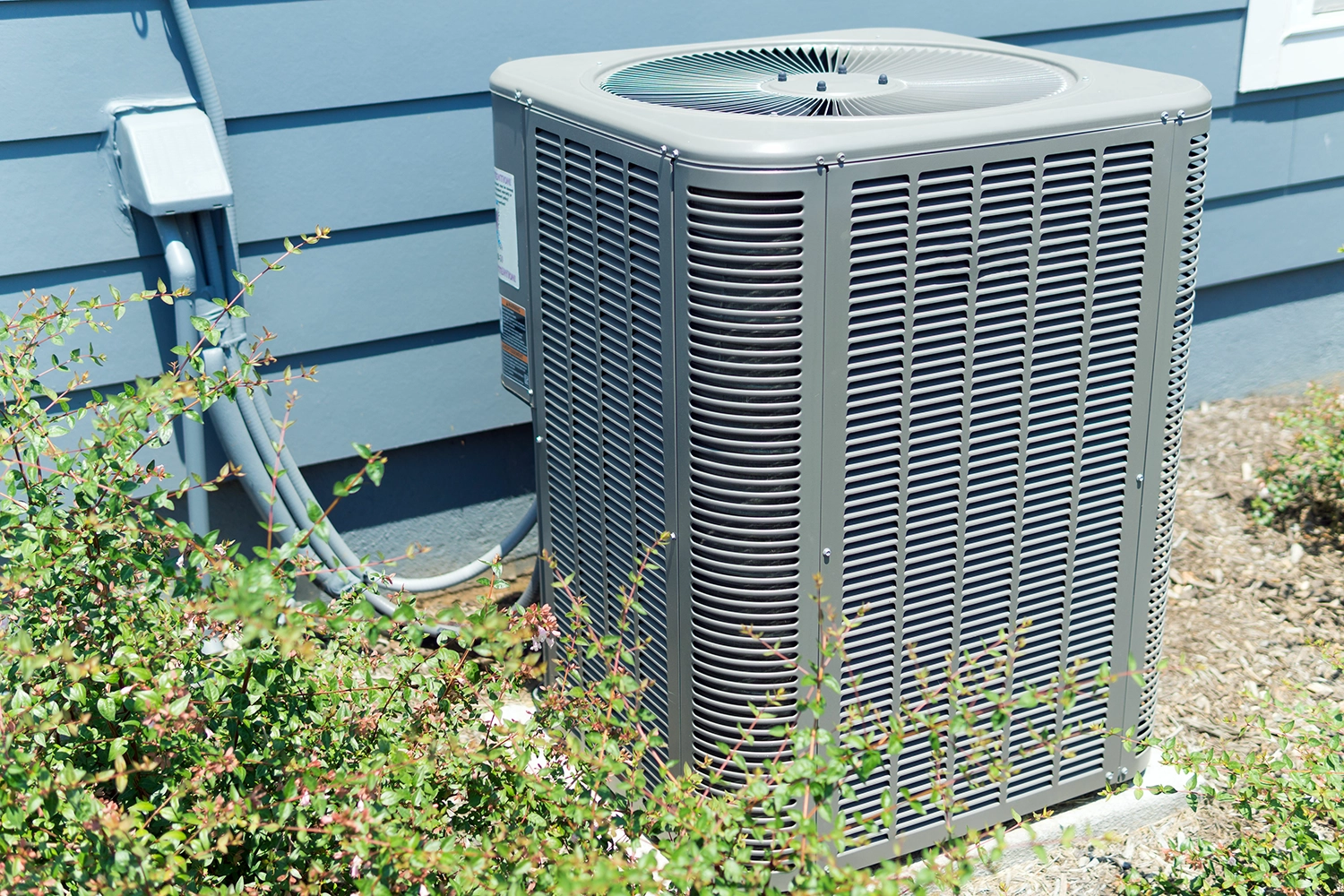
Heat pump water heaters don’t generate heat directly like traditional electric resistance heaters. Instead, they move heat from the surrounding air into the water. The system works much like a refrigerator in reverse. The unit pulls warm air from your basement, garage, or utility room. Then it extracts the heat using refrigerant and transfers that heat to the water stored in an insulated tank. Because they’re moving existing heat rather than creating it, heat pump water heaters use significantly less electricity than conventional electric tank models.
These systems do require a storage tank, typically holding 50 to 80 gallons of water. They need adequate space around the unit for proper air circulation. Plus, they work best in moderate climates or conditioned spaces. Since they pull heat from the air, they actually cool and dehumidify the space where they’re installed. This can be a bonus in humid basements during warmer months. When considering heat pump water heater vs tankless options, the storage capacity and space requirements are key differentiators that impact installation planning.
How Tankless Water Heaters Work
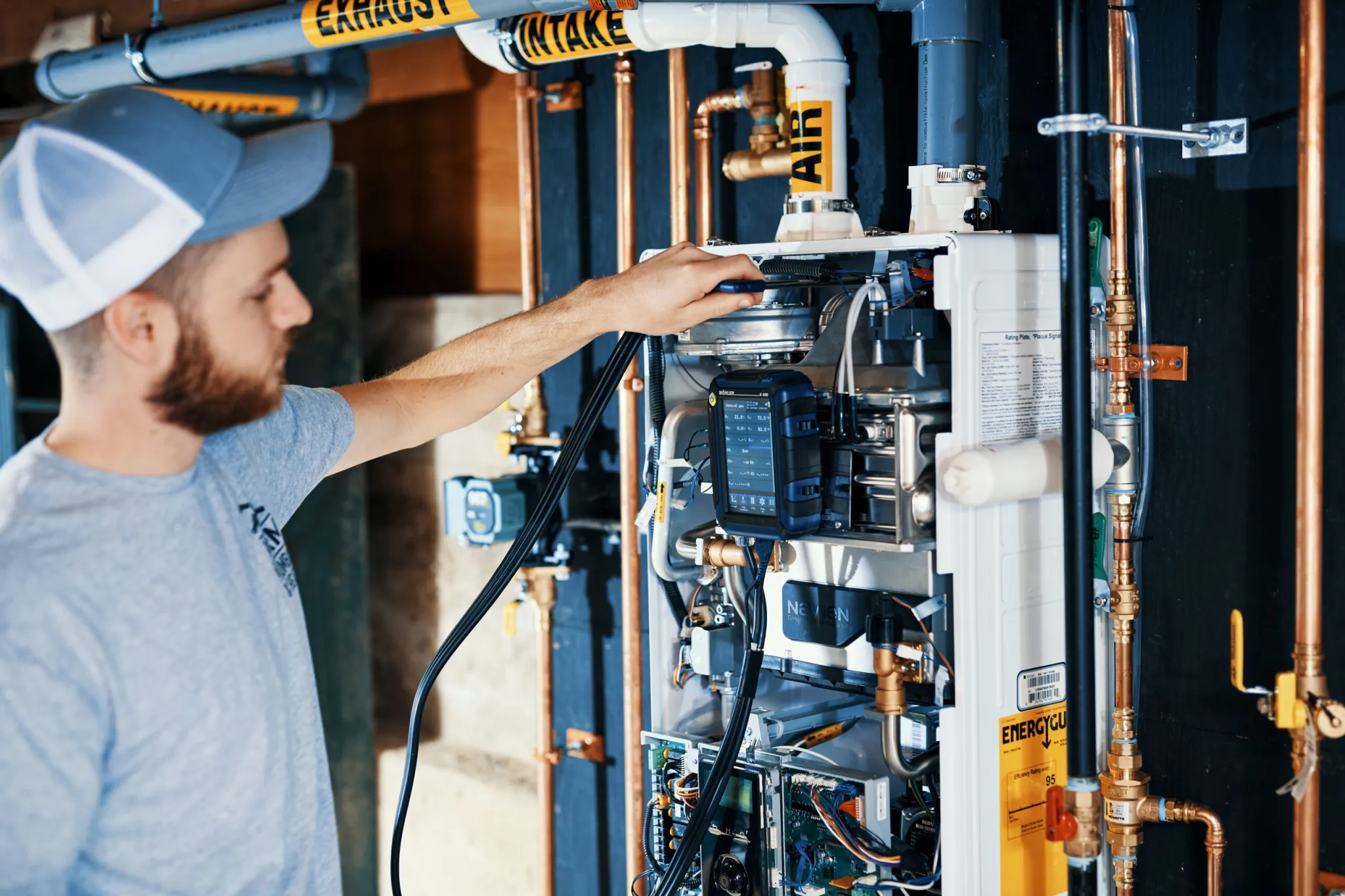
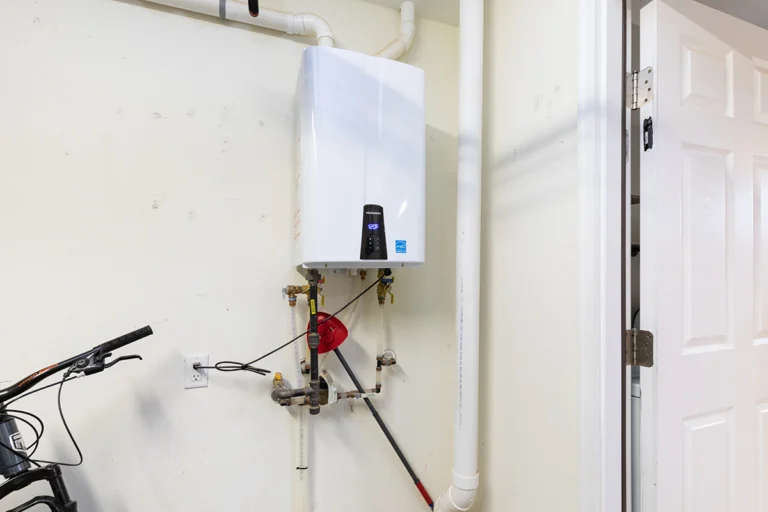
Tankless water heaters, also called on-demand water heaters, heat water only when you need it. When you turn on a hot water tap, cold water flows through the unit. At that point, either a gas burner or electric heating element rapidly heats it to your desired temperature. There’s no storage tank keeping gallons of water hot around the clock. As a result, this eliminates standby heat loss entirely.
These compact units mount on a wall and take up far less space than any tank-style water heater. Gas-powered tankless models typically deliver higher flow rates than electric versions. Therefore, they’re better suited for larger households. The system provides continuous hot water as long as you stay within its flow rate capacity. So you won’t run out during back-to-back showers the way you might with a traditional tank.
Energy Efficiency Comparison: Heat Pump Water Heater vs Tankless
Both systems offer impressive energy savings compared to conventional tank water heaters. However, they achieve efficiency differently. Heat pump water heaters typically have an energy factor between 2.0 and 4.0. This means they deliver two to four times more energy in hot water than they consume in electricity. According to the U.S. Department of Energy, heat pump water heaters use electricity to move heat instead of generating it directly, which can make them two to three times more efficient than conventional electric water heaters.
Tankless water heaters achieve efficiency by eliminating standby heat loss. Gas tankless units typically have strong efficiency ratings, while electric models can be even more efficient in certain setups. However, the savings depend heavily on your usage patterns. According to the U.S. Department of Energy, homes that use 41 gallons or less of hot water daily may see tankless water heaters operate 24%–34% more efficiently than conventional storage tank water heaters. On the other hand, larger households might find heat pump models more cost-effective overall.
Climate also plays a role in heat pump efficiency. These units work harder in colder spaces since there’s less ambient heat to extract. That said, installing one in a conditioned basement or utility room keeps efficiency high year-round. Tankless systems aren’t affected by ambient temperature in the same way. Although gas models do vent combustion gases outdoors. Understanding these efficiency differences is crucial when comparing heat pump water heater vs tankless systems for your home’s specific climate and usage patterns.
Installation Costs and Requirements
When weighing a heat pump water heater vs tankless system, upfront installation requirements can vary quite a bit. Heat pump water heaters usually need enough clearance, proper electrical connections, and adequate surrounding air for efficient operation. Our technicians will assess whether your current water heater location is suitable. In addition, we’ll make sure the system is installed safely and correctly.
Tankless water heater installations can be more complex, especially for gas models. Gas tankless systems may require gas line updates, new venting, and electrical connections for the controls. Electric tankless units may also require electrical upgrades because they need a strong power supply during operation. Our team will evaluate these details during the initial assessment.
Space requirements differ significantly too. Heat pump water heaters need vertical clearance and adequate air circulation space. They typically require at least 1,000 cubic feet of surrounding air. Tankless units are compact and wall-mounted. This makes them ideal for tight spaces, closets, or even outdoor installation in some climates.
Performance and Hot Water Delivery
The way each system delivers hot water affects daily comfort. Heat pump water heaters store hot water just like traditional tanks, so you have immediate access to a large volume. However, they have slower recovery rates than conventional electric tanks. If your household drains the tank, you might wait several hours before hot water is fully restored. Recovery time depends on system type, tank size, and household demand. For most families, proper sizing helps avoid this issue.
Tankless systems provide endless hot water in theory. But they’re limited by flow rate measured in gallons per minute. A typical gas tankless unit delivers 5 to 9 GPM. Electric models usually provide 2 to 5 GPM. Running multiple hot water fixtures at once can exceed the unit’s capacity. For example, using a shower, dishwasher, and washing machine together may result in reduced temperature. Some homeowners install multiple tankless units or a larger gas model to handle peak demand.
Considering Your Household’s Hot Water Needs
Your daily hot water usage patterns matter tremendously when choosing between these systems. Large families with high simultaneous demand might prefer a properly sized heat pump water heater with its storage capacity. Smaller households often do well with tankless systems. This is especially true for homes where hot water use is staggered throughout the day. We evaluate your household size, usage habits, and plumbing fixture flow rates to recommend the right fit.
Lifespan and Maintenance
Tankless water heaters typically last 20 years or more with proper maintenance. This is roughly twice the lifespan of traditional tank water heaters. Heat pump water heaters generally last 10 to 15 years, similar to conventional tanks. Both require regular professional maintenance to perform efficiently and reach their expected lifespan.
Our technicians will periodically clean the air filter on heat pump water heaters. We also check refrigerant levels as needed. For tankless units, we perform annual descaling, especially in areas with hard water. This prevents mineral buildup that reduces efficiency and flow. Our technicians provide maintenance services that keep both types of systems running smoothly. Plus, we help you avoid premature failures or efficiency losses.
Climate Considerations for North Shore Homes
North Shore homeowners face specific climate factors when choosing between a heat pump water heater vs tankless system. Heat pump units installed in unheated basements or garages will work harder during cold months. This can potentially reduce efficiency. However, placing them in conditioned spaces or well-insulated areas maintains their performance advantage. The dehumidifying effect can be particularly welcome in damp New England basements during summer.
Gas tankless water heaters perform consistently regardless of outdoor temperature. Although their venting requirements are important in our climate. Electric tankless systems aren’t affected by ambient temperature either. But they demand robust electrical service that some older homes may lack without upgrades.
Heat Pump Water Heater vs Tankless: Which System Is Right for Your Home?
There’s no universal answer to the heat pump water heater vs tankless question. The right choice depends on your specific situation. Heat pump water heaters excel when you have adequate space, moderate to high hot water usage, and existing electric water heating. They’re also great when you want maximum energy efficiency with lower installation costs. They’re particularly smart choices for households that qualify for utility rebates or incentives.
Tankless systems shine when space is tight and you want endless hot water capacity. They’re also ideal when you have natural gas service or robust electrical infrastructure. Plus, they work well when you’re willing to invest more upfront for long-term savings and longevity. They’re excellent for homes with lower simultaneous demand. They’re also perfect when you’re building new and can plan the installation from the start.
At Whale Worth It! Plumbing, Heating & Air, we assess your home’s existing infrastructure and your family’s hot water needs. We also consider your budget and your energy goals before making a recommendation. We’ll help you understand which system makes the most sense for your situation. Then we handle the installation properly to ensure years of reliable performance. If you’re experiencing no hot water in your shower or want to upgrade to a more efficient system, reach out to our team today. We can discuss your water heating options and get a professional assessment tailored to your North Shore home.
Frequently Asked Questions: Heat Pump Water Heater vs Tankless
Which is cheaper to operate, a heat pump water heater or tankless?
Heat pump water heaters typically cost less to operate than electric tankless systems. They often beat gas tankless models too, especially for larger households. They can be two to three times more efficient than standard electric heaters. Your actual savings depend on local utility rates, household size, and usage patterns.
Can a tankless water heater replace a heat pump water heater directly?
Not always directly. Tankless units have different space, venting, and utility requirements than heat pump models. Gas tankless systems need gas lines and proper venting. Electric models often require electrical upgrades. A licensed plumber will evaluate your home’s infrastructure to determine what changes are needed for a successful conversion.
Do heat pump water heaters work in cold basements?
Yes, but their efficiency decreases in very cold spaces below 40°F. Heat pump water heaters work best in spaces that stay between 40°F and 90°F year-round. Installing them in conditioned basements or utility rooms maintains optimal performance. The units also cool and dehumidify the surrounding air as they operate.
How long does a tankless water heater last compared to a heat pump model?
Tankless water heaters typically last 20-25 years with proper maintenance. This is significantly longer than heat pump models which average 10-15 years. Both require regular professional maintenance to reach their full lifespan. Our technicians perform regular descaling on tankless units. Meanwhile, heat pump systems need filter cleaning and occasional refrigerant checks.